April 8, 2011

Cavaillon (San Diego) – Two Black Truffles Tasting Menus

When we started our food blog about a year ago we hoped that we would be able to write quite frequently new posts every few days. We rather quickly found out that we really enjoyed to document our culinary adventures, might it be cooking at home or visiting a restaurant by photographing everything and writing about it, but at the same time we also started to realize that each post takes much longer time than we expected. As a consequence we have a continuously growing list of to-do-posts which we slowly work off. There is nothing wrong with writing about a restaurant some time after the actual visit since it still provides all the information but we always tried to post immediately after visiting special seasonal restaurant events. Unfortunately sometimes the best intentions don’t turn out to be accomplishable and somehow some special dinners fall through the cracks as it happened last year with one very enjoyable visit to Cavaillon. One advantage of special seasonal dinners are that they most of the time return after a year. Since we always want to highlight the progression and evolution of restaurants and its dishes we felt that writing about the two Black Truffles Tasting Menus at Cavaillon last and this year would be a good start.

Fine dining restaurants have of course hardly any limits on what kinds of ingredients they use but there are few which are often directly associated with haute cuisine – foie gras, caviar and truffles. We had many tasting menus where foie gras played a special role or tasting menus which heavily focused on caviar like at Petrossian under Chef Ben Bailly, but even though we often had single dishes which involved truffles we never had a full tasting menu solely build around them which really got us interested in the tasting menu at Cavaillon. Truffles were called “diamonds of the kitchen” by Brillat-Savarin and are in a simplified way underground mushrooms. Since truffle mainly exist in a symbiosis with plant roots they are commonly found in close association of trees. Pigs and dogs can easily recognize their characteristic odor and therefore are predestined for the truffle “hunt”. Even though there are hundreds of species of truffle only two are really of culinary interest – white truffles mainly from Piedmont and black truffles which predominantly come from France, Spain and Italy.

Black truffles are harvested and used in many different cuisines but they are still often closely associated with French cuisine. So what would be better than having a truffle menu prepared by one of the most talented French chefs in San Diego – Philippe Verpiand at Cavaillon. He was born in Cavaillon in the Vaucluse region in the South-East of France. Quite typical for the European system he started already at the age of 16 at the culinary school in Avignon and graduated after two years. He then honed his skills by working at numerous Michelin starred restaurants throughout France for the next ten years often only staying for one year. Some of his stations included Café de Paris in Biarritz, La Poulard near Lyon and Hotel Juana in Juan Les Pins. With the help of his friend Patrick Ponsaty, now at Mistral in Coronado, he was able to start in the US as Chef de Cuisine of Tapenade in La Jolla. After working for more than seven years under Jean-Michel Diot he finally was able to fulfill his dream of his own restaurant in 2005 named after his place of birth.
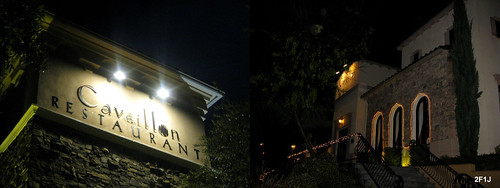
Cavaillon is in a quiet unusual location for a restaurant – several miles north of I-56 in the upscale community of Santa Luz. You have to drive on Camino del Sur for some time passing several residential communities until you see the restaurant sign which is the only thing distinguishing it from the surrounding residential houses.
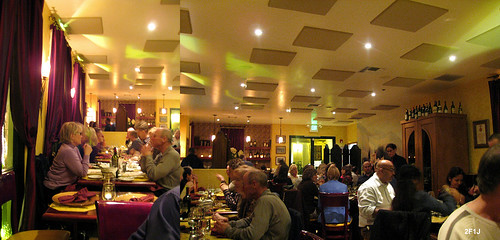
The restaurant consists of one big room which even though the tables are quite close and it is often well attended is actually not too loud to have a nice conversation. The restaurant might not resemble something you would find in Chef Verpiand’s hometown but it still has its charm and we like the ambience.

First black truffle tasting menu
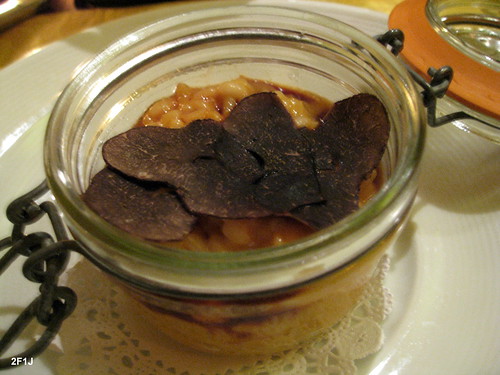

1st Course: Celery root risotto with black truffles
Even though Chef Verpiand is French one of his signature dishes are his risottos. The risottos at Cavaillon are perfect examples of this dish – the rice cooked to the right creaminess but still with some bite, not to saucy, not too dry, the appropriate amount of parmesan cheese to give the desired saltiness. This variation had the unusual inclusion of celery root which gave some slight sweetness and earthiness which worked particularly well with the shaved truffle.
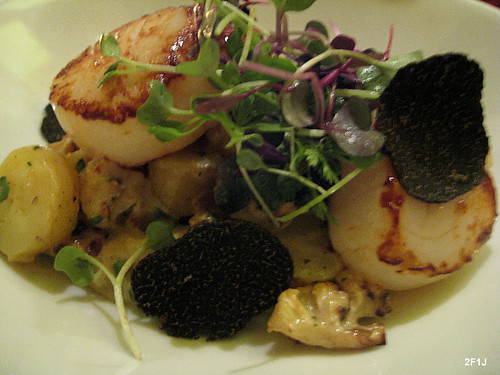
2nd Course: Seared scallops, roasted caulifowers & fingerling potatoes, black truffles, watercress.
Wonderful roasted cauliflower and fingerling potatoes in a cream-based sauce form a strong foundation in this dish which helped to accentuate the truffle flavor without overpowering the dish. The watercress added some slight spicyness whereas the perfectly seared scallops showed some of their characteristical sweetness. This dish was a good example for a composition where the whole dish is stronger than the sum of its parts.
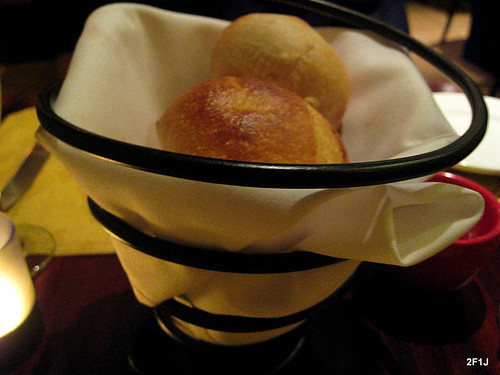
Bread service at Cavaillon consists of one type of bread roll which is freshly made in-house and comes still warm to your table. It’s perfect to eat with the butter but even better to soap up the delicious sauces of the different dishes. There is hardly ever a visit at Cavaillon where we don’t have at least a second round of bread rolls.
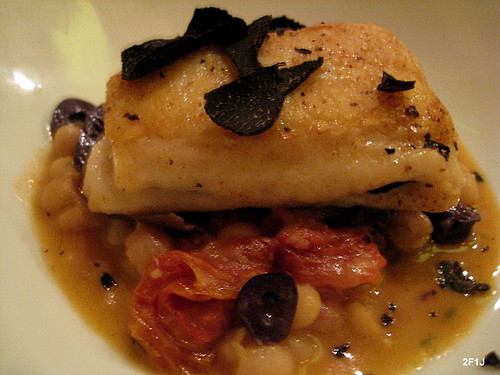
3rd Course: Petrale sole, white bean ragout, tomatoes, olives, oyster mushrooms, black truffles
When this dish arrived at the table we were first surprised that hardly any black truffles were included in the dish. Once we cut and tried a piece of the fish we realized where all the truffles were – the fish was cut into two halves and had a thick layer of black truffles in between. But even though this was a fish preparation we would like to see more often in restaurants, the star of the dish was the bean ragout. Perfectly cooked white beans in a very rich broth with olives and tomatoes which added a nice acidity and balanced the dish. We could have easily eaten a large bowl of the white bean ragout alone.
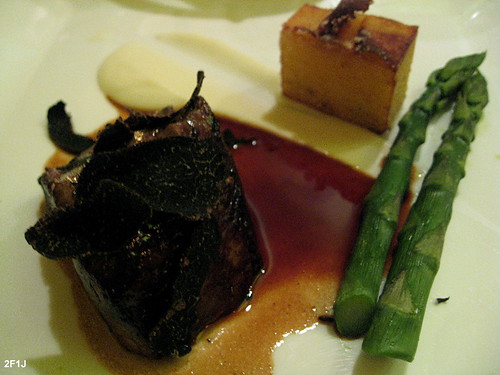
4th Course: Filet Mignon, black truffles, asparagus, potato cake
The focus of this dish was clearly on the filet and black truffles. The asparagus and the potato cake were nice additions and completed the dish but taking a bite of the melting tender filet mignon together with some black truffle shavings convinced us that these both were a perfect match.
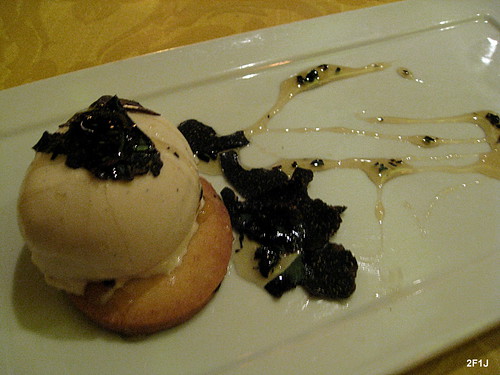
5th Course: Truffle short bread, vanilla ice cream, truffle honey, shaved truffle
Reading this dish on the menu we suspected some truffle overkill but as with all dishes Chef Verpiand understood how to balance all ingredients, especially the black truffles, but was at the same time also able to showcase its distinctiveness. The ice cream with its strong vanilla flavor worked hand in hand with the sweetness of the honey and the earthiness of the black truffle. The short bread which only had a faint truffle taste added some textural variety.


Second black truffle tasting menu
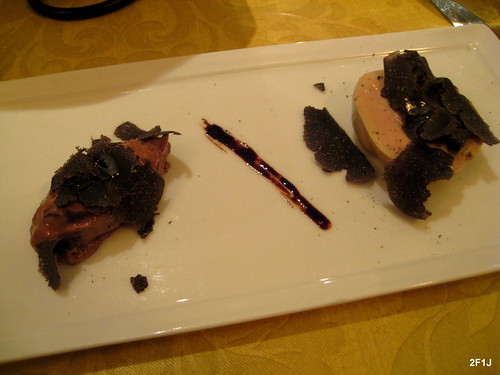
1st Course: Truffle “torchon” foie gras, cherry mousse.
One highlight at Cavaillon is always the foie gras course and this one was no exception. Chef Verpiand is specifically known for his foie gras au torchon which has an outstanding creaminess without diminishing the livery taste like so many other variations. Foie gras and truffles are always a great pair and here the chef decided to add some cherry mousse which had the right amount of sweetness to cut through the richness of the foie gras without being overly sweet. The dish was accompanied appropriately by some toasted brioche.
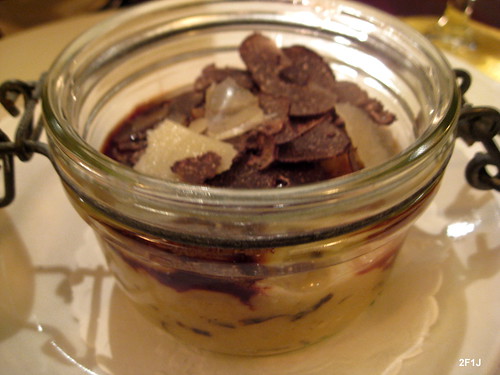
2nd Course: Black truffle risotto.
No black truffle tasting menu without risotto – and risotto is something Cavaillon is always delivering perfectly. This time Chef Verpiand decided to use a risotto bianco to really focus on the interplay of the truffle, rice and cheese. There is a reason why risotto al tartufo is a dish in Italy reserved for only special celebratory occasions.
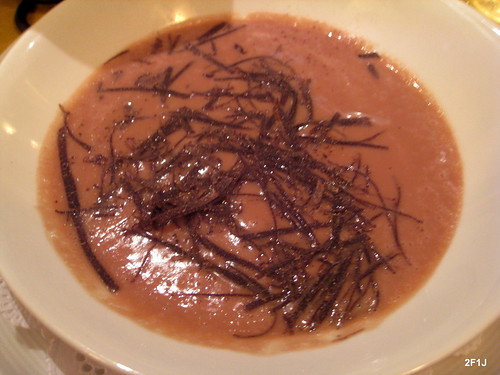
3nd Course: Scallops carpaccio, chestnut and celery root velouté, black truffles
Velouté means velvety in French and best describes this dish. Velouté is made out of stock and a blond roux to give its creaminess which was in this dish combined with chestnut and celery root. Both components worked perfectly together with the black truffle stripes to give the velouté a luxurious feeling. What really put this dish over the top was the inclusion of scallop carpaccio – slightly warmed from the heat of the velouté this completed the dish by adding some sweetness and texture. The best dish of both tasting menus.

4th Course: Duck breast Rossini, squash puree, port wine demi-glace.
Perhaps one of the most famous preparation including truffles is tournedos Rossini – seared foie gras, truffles and filet mignon. Chef Verpiand used here tender duck breast instead of the filet but the interplay of the foie gras, truffles and meat was as good as you would expect from such a classic. We also liked his use of the sweet squash puree to cut through the richness of the dish.
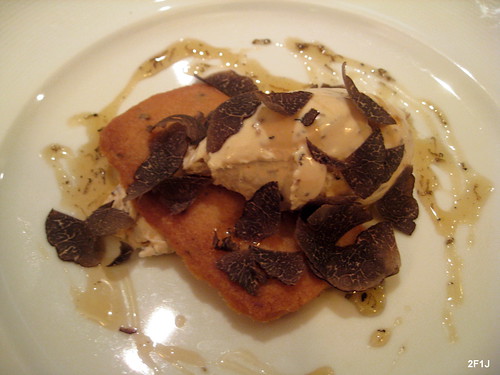
5th Course: Truffle cheesecake
We ended this truffle tasting menu with a deconstructed cheesecake consisting of some shortbread, scoops of the filling, truffle honey and shavings of truffles. Somehow this dish didn’t really work for us and we didn’t feel that it came together. The honey made the cheesecake too sweet, the shortbread didn’t complement the fillings and this was the one dish for us where the truffle flavor didn’t add much to the dish.


We don’t really have a favorite neighborhood restaurant in the area we are , but Cavaillon is as close as it gets for us to have such a restaurant. We come here fairly regular, enjoy the relaxed atmosphere, and the cooking style from Chef Verpiand reminds us of French bistro and comfort food but often with an interesting twist towards more upscale French cuisine. Even though we also sometimes pick from the regular menu we often enjoy just letting Chef Verpiand choose for us with one of his tasting menus. Based on these many positive experiences here we were really looking forward to have our first black truffle tasting menus in this setting and the restaurant didn’t let us down. Tasting menus focused around a certain ingredient are difficult for chefs as the guests can easily get bored from having the same component over and over again in every dish. It might be even more challenging if this ingredient is truffle with its very characteristic, dominant taste. Initially we were wondering if we would get a truffle overkill after a few dishes but the chef creatively was able to incorporate truffles in every dish in such a way that it was always present but never overpowering. Many of these dishes would have been interesting without any truffles but the addition of the black truffle really put every dish on a completely different and elevated level. Black truffles were the key ingredients in these dishes and the focus of the tasting menu but never the lone reason any of the dishes worked. It was also beneficial that Chef Verpiand only used real truffles in all of his dishes and forbear from using any truffle oil which is an easy way many chefs use to have a dominant, often overpowering, truffle flavor in their dishes but it also gives these dishes a distinct artificial truffle taste.

A few years ago Cavaillon had service issues with some inattentive and unprofessional servers but after some significant changes at the front of the house some time ago the restaurant has now one of the better waiting staffs in San Diego. The servers are friendly, attentive and knowledgeable enough to provide an enjoyable dinner experience. The outstanding food with the good service would make Cavaillon one of the most notable restaurants in San Diego and so it was quite a disappointment for us when Chef Verpiand recently announced that he is unhappy with his situation in San Diego and that he is planning to sell Cavaillon soon to move to Texas. Not only will San Diego lose one of the most talented chefs but also a unique restaurant which covered a niche with its mix of French bistro and haute cuisine not seen anywhere else in San Diego on that level. Cavaillon was perhaps one of the most underrated restaurants in San Diego due to its location and the chef not being involved in one of the chef organizations like Cooks Confab important for far-reaching publicity. We can only hope that the new owner and chef will either continue with Cavaillon on such high quality level or find their own unique niche to adequately replace Cavaillon.


14701 Via Bettona
San Diego, CA 92127-4808
(858) 433-0483
March 14, 2011

Chard Quiche with Pine Nuts

During our graduate school time we lived for two years close to Basel in Switzerland. Even though during this period we never had much time to really explore the culinary scene of Basel or other parts of Switzerland we were able to experience a few of the typical treats like Basler Leckerli which is a hard biscuit made with an unique spice mixture or Rivella, a soft drink made out of milk whey. The food we most often enjoyed was “Wähen”. Wähen are essentially the Swiss version of tartes and quiches. Originally reported in 1556 as a fruit quiche, over the centuries many savory versions also appeared and we were often starting our weekends going to a bakery and eating a piece of one of the many different Wähen on display. This was of course not the first time we ever had a quiche since these are popular throughout Germany as well but they originated from the region of Alsace and Lorraine which are close to Basel.

Quiches were originally food of the poor and made by the women in Alsace to feed their families with a few, cheap available ingredients – egg, milk and bacon as a cheap and nonperishable form of meat. Since at those times, a few hundred years ago, most families baked their own bread making quiches was an efficient way to use leftover bread dough. What started as quiche Lorraine for the poor developed over time to a well-regarded class of dishes everybody around the world is enjoying. Today a large variety of toppings are used with different kinds of meat, vegetables and cheese. A consistency between these many variations is the use of eggs, milk or cream and shortcrust pastry. What started for us as a weekly visit to the bakery led to a continuous interest in making quiches at home like this chard quiche with pine nuts.


For this quiche we used a few more unusual ingredients to underline the uniqueness of chard. Whole spelt flour has a more robust and nuttier flavor than the often used regular wheat flour which helps accentuate the delicate flavor of the chard. Instead of using only eggs and cream for the filling we also added ricotta which gave the quiche more body and at the same time added a slight sweet note. The complex flavor of sage with its spicy, aromatic and slightly bitter tones helps to bring an unexpected taste to the quiche. The long baking time helps to mellow out these flavors so that the sage doesn’t dominate the dish. A salad and a nice glass of white wine made this quiche a wonderful dinner.


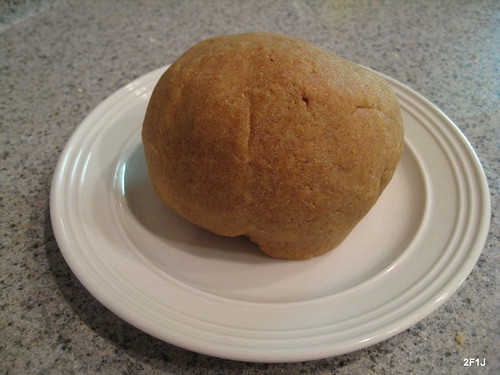
Sift flour on working surface, form a well in the flour and add egg with some salt. Place the butter in small pieces around the flour and mix everything using a knife.

Knead dough until smooth and store it covered in fridge for 30 minutes.

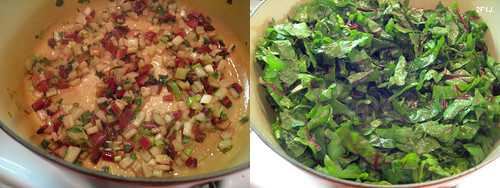
Heat oil in pot over medium-high heat and cook spring onions, chard stems and sage for five minutes. Add chard leaves and cook for three minutes until wilted. Season with salt and nutmeg. Preheat oven to 200C/400F.

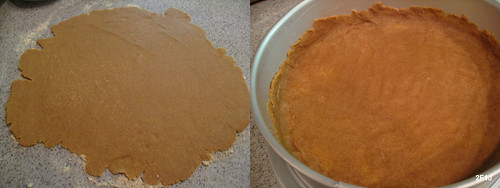
Roll out dough on a little bit of flour and put dough into 30 cm/12 inch spring form.

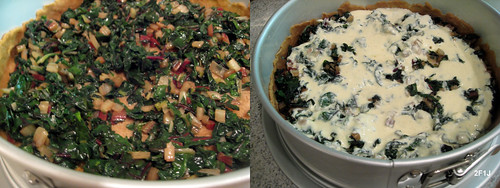
Mix ricotta with heavy cream and eggs. Season with salt, pepper and nutmeg. Fill chard mixture into spring form and add ricotta mixture. Bake quiche for 25 minutes in the oven.

Sprinkle provolone and pine nuts over the quiche and bake for another 15 minutes.


Recipe adapted from “Quiche, Tarte und Co.” by Gräfe und Unzer

Serves 4

250 g (9 oz) whole spelt flour
1 egg
150 g (5.5 oz) butter
750 (27 oz) rainbow chard, leaves cut into stripes, stems diced
1 bunch spring onions, diced
4 leaves of sage, finely chopped
2 tbsp Canola oil
nutmeg
200 g (7 oz) soft ricotta
100 (3.5 oz) heavy cream
2 eggs
40 g (1.5 oz) pine nuts
50 g (2 oz) provolone, freshly grated

March 4, 2011

French Laundry (Yountville) – Special Extended 18-Course Tasting Menu

In today’s media-driven world you constantly hear and read about new interesting restaurants opening or closing somewhere. If you are interested in food it is really hard not to get continuously bombarded by news on discussion boards, blogs or magazines about new restaurant trends emerging or new chefs making an impact in the culinary scene. And so it shouldn’t come as a surprise that like many foodies we also have many different lists of interesting restaurants we want to visit all over the US and the world. At the same time every foodie seems to have the one special restaurant which fascinated them early on, which they always wanted to visit and which is their ultimate destination. Similar to explaining why a certain music band is so special or a why a painting has this particular fascination it is often hard to explain why one restaurant sticks out to all the others. Of course the food and cuisine is a major factor in the interest for a restaurant but real fascination goes far beyond and includes also the mindset and philosophy of the chef, the focus on ingredients and techniques and even the location. Since moving to California about ten years ago and getting highly interested in high-end restaurants this special restaurant for us was always Thomas Keller’s French Laundry in Yountville.

Thomas Keller was born in California but lived most of his youth in Palm Beach, Florida. During this time he started to work during summers or after school first as a dishwasher at the Palm Beach Yacht Club but also soon as a line cook which ignited his interest in cooking. During summers he also started working at the Dunes Club in Rhode Island where he met his key mentor – Chef Roland Henin. Henin was important in exposing to and teaching him French cuisine but also to start developing his own philosophy of cooking. After working several cooking positions in Florida Thomas Keller started working at La Rive in the Hudson Valley River valley where he had for the first time larger responsibilities but also the possibility to work more with local and seasonal produce and farmers. Unable to buy La Rive Keller decided to hone his skills by working in several Michelin starred restaurants in France like Guy Savoy and Taillevent. After returning to New York he worked at La Reserve and Restaurant Raphael before opening in 1986 his first own restaurant – Rakel. Rakel got good reviews but due to the hard financial times the restaurant didn’t survive for a long time. He then had a period of time where he worked at different restaurants in New York and Los Angeles before he finally found in 1992 the French Laundry at that time owned by Don and Sally Schmidt. After raising money for quite some time Thomas Keller could finally purchase the French Laundry and open it in 1994. Even though since then Thomas Keller opened several other successful restaurants for us the biggest fascination always focused on the French Laundry. Not unlike with music albums of rock bands the earliest releases often represent the purest and most honest approaches and tend to give the best chances to experience the original work and philosophy.

Even though we visited many high-end restaurants over the last years and the French Laundry was for a long time high on our restaurant list we somehow never really started seriously tackling getting a reservation at the restaurant. But recently we decided to go on a three week culinary trip to the Bay area and felt that it was finally time to experience the French Laundry. After some preparation we were able to get a reservation on our preferred day for the last seating – what better day to choose for our first visit than a special birthday celebration. Like we have done with many restaurants before we contacted the French Laundry and we wanted to give the chef absolute creative freedom and asked for an earlier seating to have a chance for a special tasting menu without any limitations. After some extended phone discussions over a few weeks we finally got a table for the first seating and a promise to have a special menu on our visit which turned out to be a memorable extended 18-course tasting menu at the French Laundry highlighting why this restaurant had and still has such an impact on the culinary scene.

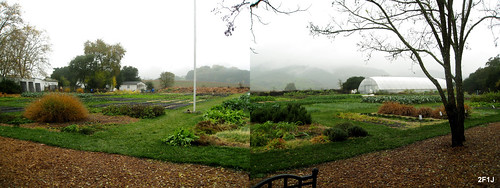
The French Laundry is located in the small village of Yountville a few miles north of Napa. Yountville seems to be existing mainly to host a large number of restaurants and hotels for its small size. Yountville is also the epicenter of the Thomas Keller culinary empire with French Laundry, Bouchon, Bouchon Bakery and Ad Hoc within walking distance. Whereas all other three restaurants are closer to the center of the village French Laundry is a little bit more outside. Across from the French Laundry are the restaurant’s vegetable gardens which should play an important role for many of the ingredients on our visit. These gardens are quite impressive with their large variety of often unusual produce.

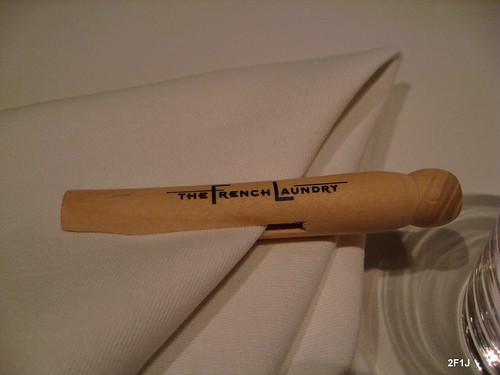
The French Laundry restaurant is in a historic building which was built more than one hundred years ago as a saloon before it was converted in the 1920s into a French steam laundry. The building was renovated in 1978 before it was used as a restaurant. If one wouldn’t know that the building was used as restaurant it would easily go through as a residential building. Only a smaller sign reveals the true purpose of the building.

The restaurant is spread out over two floors with the main dining room on the lower floor. The maitre’d knew of our long tasting menu and gave as a nice four top in the corner of the main room. We were once asked if we were interested to see the menu before or if we trust the chef and just want to be surprised. Obviously we just wanted to sit back and start the journey into the culinary world of Thomas Keller and the French Laundry.

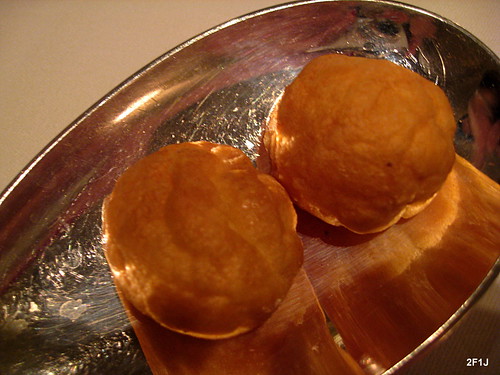
1st Amuse Bouche: Gougères
Pâte à choux filled with warm aged Gruyère mornay sauce. Very light pillows filled with a slightly salty crème which still showed the typical aged Gruyère flavor. A rather classic French start to the dinner and for us a kind of palate cleanser for the coming dishes.

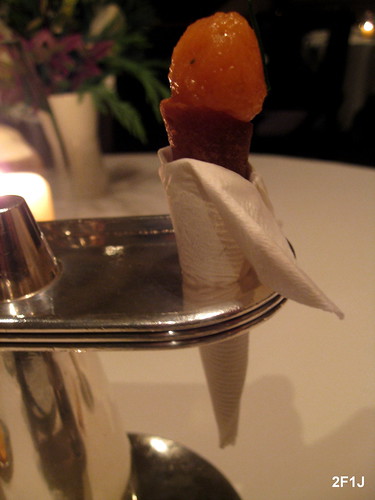
2nd Amuse Bouche: Scottish Salmon Coronets
One of the signature amuse bouche’s of the French Laundry. The cone had a buttery and soft texture with some sesame seeds. The salmon was almost pate-like with a delicate taste. The bottom tip of the cone was filled with some crème fraiche to give it a slightly tangy finish.

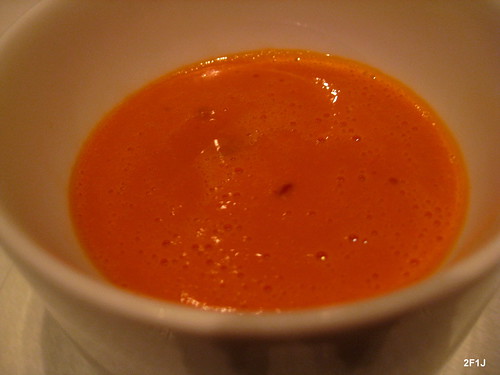
1st Course: Nantes carrot velouté, medjool date, marcona almonds and cilantro
As the next course the server put small bowls of an orange soup in front of us and informed us that the carrots for this velouté were harvested just a few hours ago in the gardens across the street. This carrot soup was unlike any other carrot soup we had before. It had a very intense carrot flavor like it was made out of carrot extracts but at the same time a velvety and light texture. The dates gave the soup just the right sweetness to balance the flavors and almond added some nice textural change. We could have easily eaten a large bowl of the velouté.

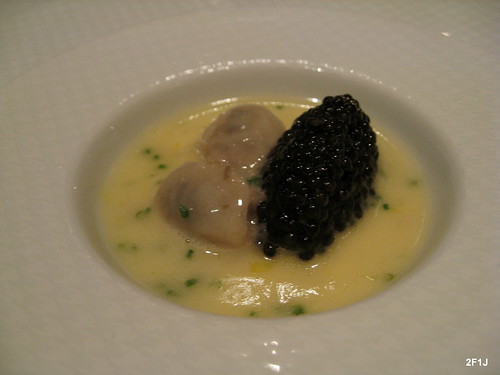
2nd Course: “Oysters and pearls” - “Sabayon” of pearl tapioca with island creek oysters and white sturgeon caviar.
Perhaps the most written about savory course at the French Laundry and one of the few courses which are part of nearly all tasting menus. Even though we wanted to experience the French Laundry as a whole event we were looking forward to finally try this dish – and it didn’t disappoint. The creamy and rich sabayon laid the foundation for the dish and the tapioca supported this richness with its texture. The perfectly cooked oysters had a wonderful sweetness whereas the quenelle of caviar provided the right balance of saltiness. It’s easy to understand why this dish has such a reputation as being a showcase for Thomas Keller’s cooking as it is a perfect combination of texture, flavor and creativity. The use of a mother-of-pearl spoon to serve the dish fits perfectly into the picture.

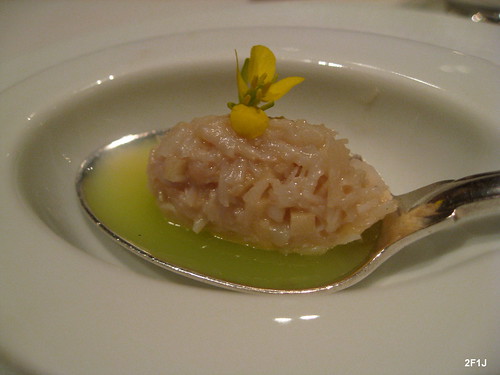
3rd Course: Salad of Dungeness crab, apple gelée and “fines herbes”
Another course which demonstrated Thomas Keller’s cooking philosophy – on one side high quality ingredients like cooked Dungeness crab which was presented in a way that its natural flavors speak for itself. At the same time he uses every kind of technique necessary to add components to the dish which complements and enhance this flavor and brings it to a new and often unexpected level. Here the slightly sweet and tangy apple gelée was key to the success of the dish.

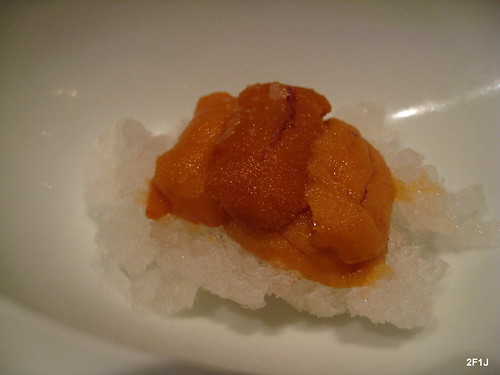
4th Course: Hokkaido coast “uni” with sake granité
Over the years we really have learned to love uni and its unique flavor reminding us of ocean, salt and sea air. Normally we had Santa Barbara uni which has a light yellow color whereas the Hokkaido uni had a much darker orange color. The flavor of the Hokkaido uni was similar to one from Santa Barbara perhaps a bit more pronounced and stronger. The sake granite was a good addition as itself had similar to the uni first a slight sweetness which changed after melting in the mouth to some bitterness without overpowering the delicate flavor of the uni.

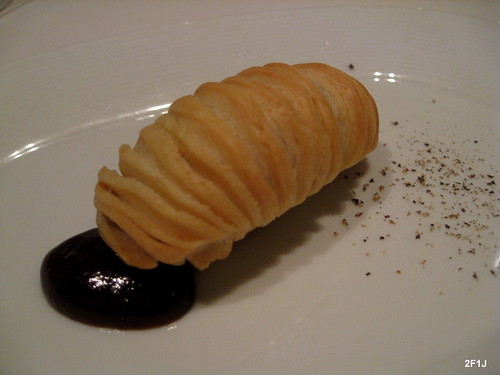
5th Course: “Ris de veau en croûte” with “pruneaux d’Agen”
We had to smile when the server brought this dish to the table as its shape reminded us of a caterpillar. The flaky, light puff pastry shell broke easily to reveal its tasty inside – perfectly seared veal sweetbreads. Sweetbreads can easily be overcooked but this version had the right consistency – not too soft without being too dry. The dish got some refreshing fruitiness from the prune sauce made out of the famous prunes from the region of Agen in France.

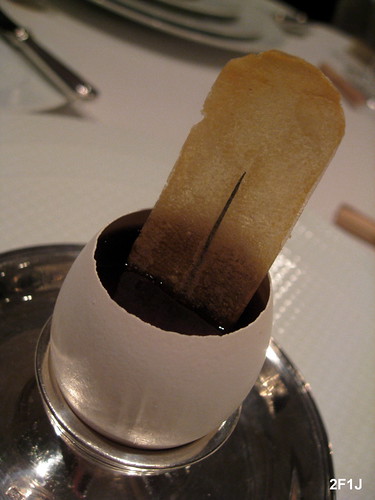
6th Course: Hen egg custard, ragout of Périgord truffles
This plain looking egg had some amazing content – at the bottom was white truffle custard which was topped with a ragout of black truffles made out of veal stock. This creation was crowned by a chive potato chip perfect for mixing the tasty mixture. Not only could you smell this course long before it reached our table but was an impressive flavor explosion when eaten from the different truffles and the veal stock.

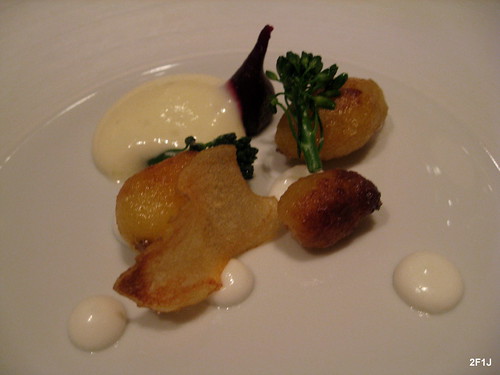
7th Course: Salad of French Laundry new crop potatoes, baby beets, broccoli and horseradish mousseline.
Another dish in which the garden of the French Laundry across the street played a major role. A few new potatoes were slightly roasted so that the roasting flavor didn’t overwhelm the tastes of the different vegetables. Especially the baby beets added some nice earthy component to the dish. The horseradish mousseline helped to add some mild spicyness.

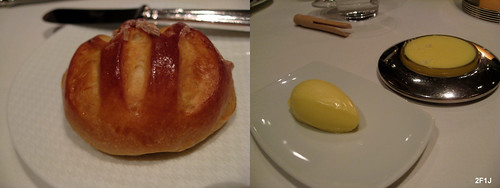
All these courses so far really didn’t need any bread but now we were presented with the pain au lait from the Bouchon Bakery down the street. This warm and buttery role had a wonderful soft texture and was accompanied by two different butters - an unsalted goat’s milk butter from Andante Diary in Petaluma and a whipped salted cow’s milk butter from Animal Farm in Vermont.

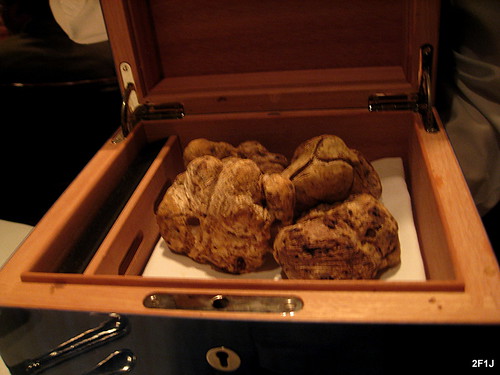
Before bringing the next course our server came to our table and presented this – white truffles from Alba. The smell was so strong that people at other tables turned around to look at our table.

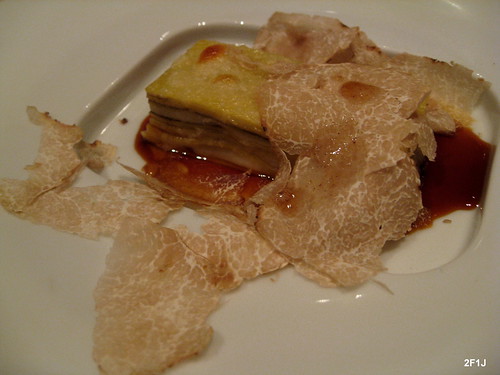
8th Course: Castelmagno cheese “lasagna” with white truffles from Alba
The lasagna was a good vehicle for the white truffles. Many layers of perfectly al dente pasta where covered in noisette sauce which helped to bring out some of the truffle flavor. We were a little bit surprised that despite the very strong aroma of the truffle and the generous slices the actual truffle taste was quite subdued.

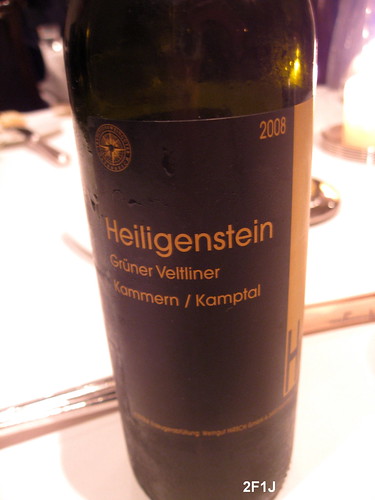
For the first part of the menu we decided on a Gruener Veltliner – Hirsch, Heiligenstein, 2008 – which was a light-bodied wine with some acidity and some green apple and lemon aroma.

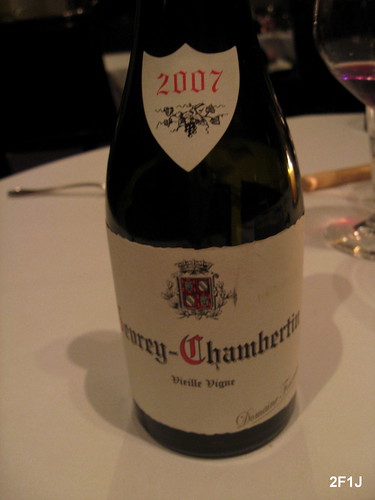
The second part of the dinner was accompanied by a Burgundy – Denis Mortet, Gevrey Chambertin 2007 – which had some quite strong berry flavors, some earthiness and a long aftertaste.

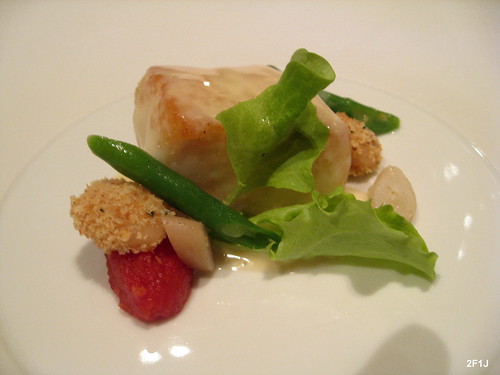
9th Course: Sautéed fillet of striped bass, razor clams, butter beans “en persillade”, San Marzano tomato compote, petite lettuces and extra virgin olive oil emulsion.
Perfectly cooked striped bass filet was tender and flaky, the razor clams were also tender but still had some “bite” whereas butter beans remained, as you would expect by their name, soft and buttery without being mushy. The “en persillade” coating, bread crumbs and parsley, was a nice textural change as were the “al dente” haricot verts. Key component of this dish was the tomato compote which brought the dish together with its acidity and slight sweetness.

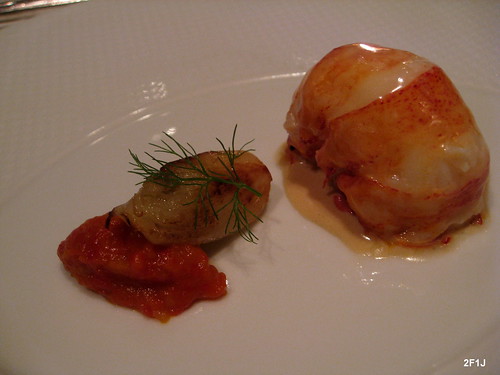
10th Course: Sweet butter-poached Maine lobster tail, piperade, young fennel and “sauce Noilly Prat”
A large piece of succulent lobster tail which had the wonderful slight sweetness of perfectly poached lobster. The soft piece of young fennel added unexpected slight anise flavor which worked nicely with the Noilly Prat based sauce. Similar to the tomato compote in the course before here the piperade helped to bring the dish together with its more subdued acidity.

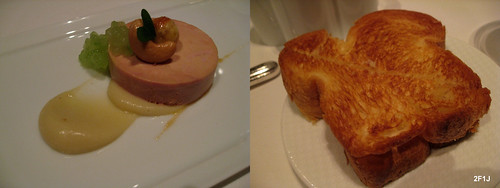
11th Course: Moulard duck “foie gras au torchon”, Gros Michel banana, celery, cashew, oxalis and honey-banyuls “gastrique”
Thomas Keller is well known for his great dishes including foie gras, and this classic foie gras au torchon was no exception. Wonderful buttery foie gras smeared on the warm brioche showed its characteristic melt-in-your-mouth livery flavor. The foie gras was outstanding but what really elevated the dish were the “condiments”. Foie gras is often accompanied by some sweet and savory components but it was first surprising to see bananas and celery with this foie gras and we were initially skeptical if it would work. After just a few bites it was clear that this was a fantastic combination. The banana puree and the celery provided just the right amount of sweetness with some savory undertones without being cloying and worked nicely with the foie gras. The roasted cashews added some textural variety. After we had eaten about half of our brioche the server brought us new warm pieces of brioche to ensure the best foundation for the foie gras.

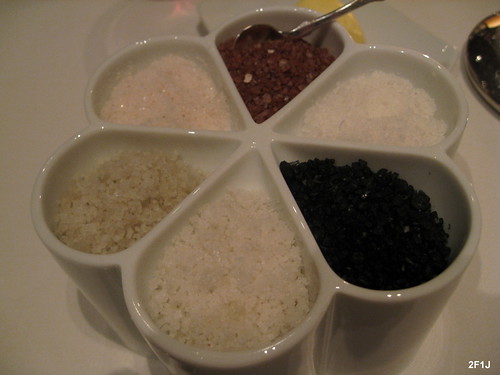
For this and the next few courses we were provided with an array of different salts. It was really fun to taste these and it was astonishing how such small amounts of “impurities” have not only such an effect on the color of the salt but also the flavor.

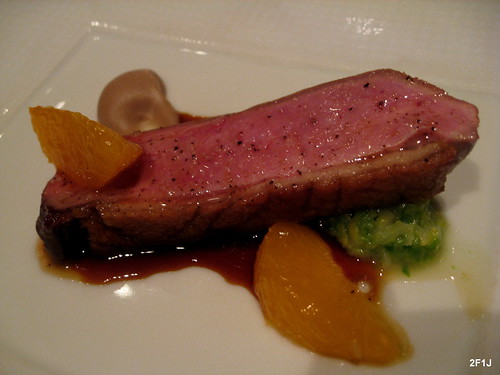
12th Course: “Aiguillette” of Liberty Farm pekin duck, melted cabbage, Satsuma mandarin, chestnut purée and ginger”jus”
An interesting “asian” take on duck – very tender sous-vide cooked duck breast where especially the ginger-infused jus gave the dish an “asian” touch which was intensified by the chestnut puree. The sweetness of the Satsuma mandarin helped to cut through the fat of the duck.

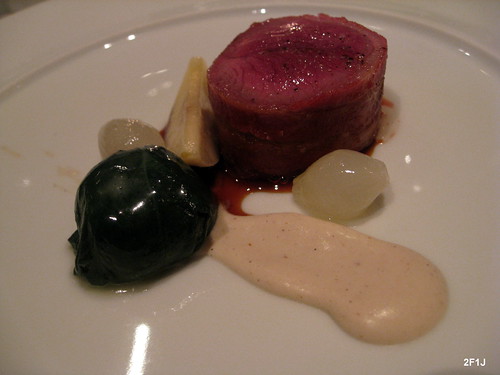
13th Course: Broken Arrow Ranch venison, Hobbs’ bacon, arrowleaf spinach, flowering quince, white pearl onion and juniper-scented “soubise”
Very tender vension wrapped in bacon was rather classical accompanied, as game often does, by a juniper-scented sauce. The small ball of arrowleaf spinach was not only a nice visual variety in this dish but also helped to lighten up the dish.

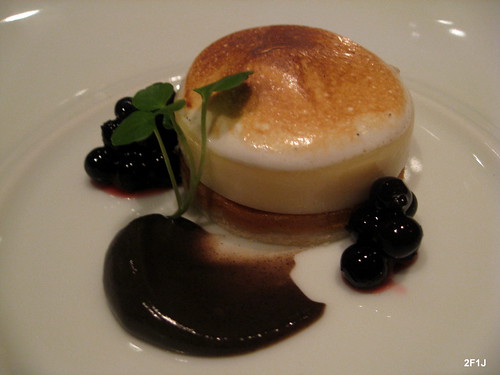
14th Course: “Sweet potato pie”, “Cavatina”, marshmellow, pickled huckleberries, watercress and black winter truffle
Instead of an “official” cheese course we were served this combination of a dessert and a cheese course. This was a cheese cake made out of cavatina goat cheese from Andante Diary and had a pronounced, slightly salty, typical goat cheese flavor. The pickled huckleberries and the black truffle sauce were similar to what you expect as condiments for a cheese course. An interesting and well executed course but we felt that a regular cheese course would have been a better progression between savory and sweet courses and that this course didn’t really fit in at this point of the tasting menu.

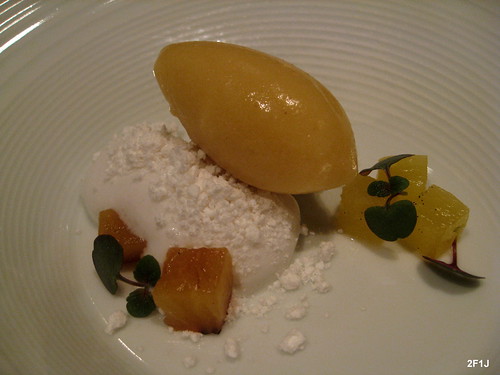
15th Course: Feijoa sorbet, “tres leches”, coconut and pineapple
This was the first time for us that we had feijoa which is also known as pineapple guava or guavasteen and it had an interesting flavor combination of kiwi and papaya with some slight banana flavors in the background. It matched perfectly to the light tres leches cake. The coconut powder and the lightly roasted pineapple completed this very refreshing and light dessert which was an outstanding start for the sweet part of the tasting menu.

16th Course: “Coffee and doughnuts”, cinnamon-sugared doughnuts and “cappuccino semifreddo”
The most famous dessert of the French Laundry – wonderful light freshly made and still warm doughnut and doughnut hole with a light cinnamon flavor which was perfectly matched with the espresso semifreddo. The popularity of this dessert is not surprising and fully justified.

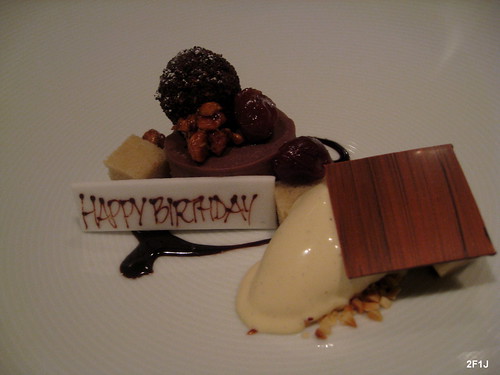
17th Course: Gianduja chocolate “ganache”, Guiness “génoise”, sour cherry, hazelnut and malt ice cream
As the last dessert we were presented a plate with a “collection” of different “classic” desserts like sponge cake, ganache and malt ice cream which all by itself were already great but eaten together really showed a nice variety of complementing flavors.

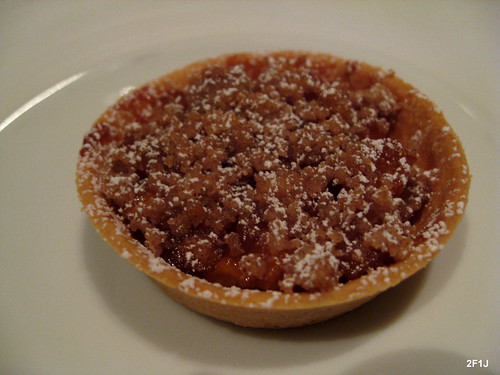
18th Course: Granny Smith cake with streusel
When we thought that we were finished with our tasting menu one of our servers came, presented us with these cakes and mentioned that the kitchen thought we would like to have another dessert. How can you not like such a classic approach to an apple cake – light, fruity and with a good balance between sweetness and sourness of the apple – a perfect ending to the dinner.

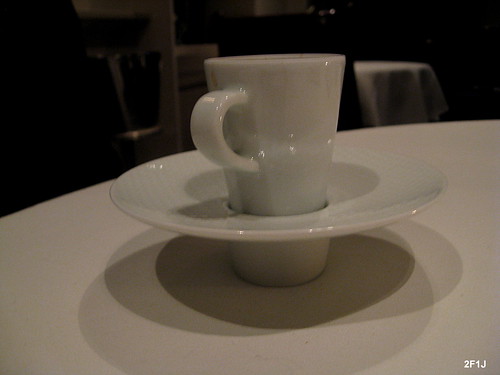
The espresso was brought in unique cups which according to our server are nicknamed “flying saucers” by everybody and it’s easy to see why. The espresso was surprisingly good for restaurant espresso with a good crema.

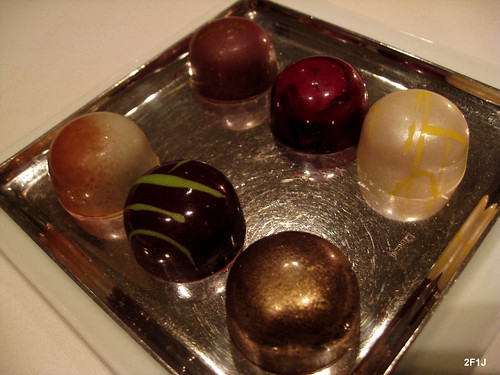
Mignardies: And the night ended with some tasty treats

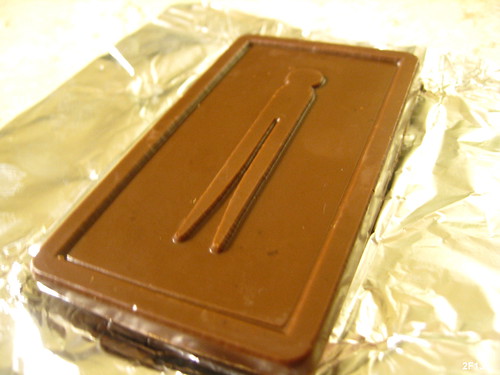
Before we left the French Laundry we were given several bags of shortbread cookies and chocolate which we would enjoy over the next few days


We were really looking forward over several years to visit the French Laundry but at the same time once we scored a reservation we were also a bit anxious if we would be expecting too much and ultimately be disappointed. It was similar to liking a rock band for many years and then finally meeting the musicians in person, and quite often you might find out that the imagination is better than the reality (except when we met the Scorpions last year). But we were very happy to find out that the reputation of the French Laundry is more than justified and the restaurant lives up to the hype, yet it even exceeded our already high expectations. One of the criticisms you hear sometimes about Thomas Keller and the French Laundry is that the cooking is soulless and just focuses on techniques. After our visit to the restaurant these accusations are hard to understand as we felt that the cooking and the dishes at the French Laundry not only showed an extremely high level of technical sophistication but also true dedication to creativity and food and ingredients in itself. It was impressive to see how much the produce grown in their own garden across the street had an impact on different dishes throughout the tasting menu. At the same time the restaurant is looking to also use the best ingredients available anywhere for all their dishes – it’s a symbiosis of cooking locally and globally driven by such a high interest of the culinary team in the quality of their dishes. We also liked that even though the dishes showed such a high level of creativity and often unexpected twists the chef always made sure to use all the techniques to still let the natural flavors of the ingredients speak and not muddle them unnecessarily. For us the French Laundry is an ingredient-driven restaurant which just uses all available techniques in a very creative way to get the most out of the flavors of all ingredients.

The service at the French Laundry is, as you would expect for a three-star Michelin restaurant, very good and professional, even though they made a few small mistakes like forgetting to ask if we wanted coffee before bringing the bill, and formal but also a bit impersonal. We have seen at other high-end restaurants like Providence in LA that professional and formal service can be at the same time warm and personal. An outstanding service team is able to adapt their service style throughout a dinner according to the style of the customers. The exception was the sommelier who clearly was able to judge fast what kind and style of service each customer wanted and adapted his style accordingly so that everybody felt comfortable with him. It was very nice from the maitre’d that he invited us to the kitchen after our dinner so that we had a chance to see inside, including the famous video screen to Per Se and the “Sense of Urgency” sign under the clock, and exchange a few words with chef de cuisine Timothy Hollingsworth.

Overall our first visit to the French Laundry was an outstanding night and even though we hesitate to name any restaurant visit as the best we ever had, since this can often change depending on our mood, there is no doubt that this visit was and will always be one of the highlights in our culinary journey. Over the last few years we regularly visited many favorite high-end restaurants like Providence and Bistro LQ in LA which deliver outstanding food and service and were wondering before our visit to the French Laundry if a restaurant can really be better than those. The visit made us realize two things – restaurants like Providence and Bistro LQ perform indeed on a very high level but it also showed us that the French Laundry is a class of its own. It’s very rare that there is not a single course in a long tasting menu which disappoints but even more each course was always a new and unexpected culinary exploration. The French Laundry is not a restaurant you put on your regular rotation list but when we left the restaurant after more than six hours we already discussed how and when we will return to the French Laundry.

French Laundry
6640 Washington Street
Yountville, CA 94599
(707) 944-2380