November 30, 2011

Kitchen 1540 (San Diego) – 20 Dishes, 10 Courses – White Flag Tasting Menu

Our interest in everything about food, cooking and restaurants isn’t much of a secret to our co-workers and so it is not surprising that often discussions at work center around these topics. One question we are asked regularly is about the best restaurant and special memorable meals. It is impossible to answer about “the” best restaurant as we like a broad spectrum of restaurants ranging from small ethnic hole in the walls to high-end upscale restaurants and it really depends on the occasion and mood which ones we prefer on a given day. And so it is easier to just agree on general criteria for a good restaurant – quality of food and service paired with a fitting ambience. The more interesting question is about special memorable meals and how they are defined for us. Even though we are not fixed on one particular cuisine it became more apparent for us over the years that we truly remember and discuss for a long time those dinners in restaurants which are trying to combine unusual flavor and ingredient combinations far outside of what the majority of restaurants are serving often incorporating modern techniques. Most of the restaurants we enjoy most, like Bistro LQ, Saam or Coi are located in Los Angeles and San Francisco. San Diego has a number of restaurants we have on our heavy rotation list but for a long time none of them really belonged to the list of restaurants for one of these memorable dinners. At the same time the background and reputation of several chefs in San Diego is on par with their peers in LA and San Francisco and so we often wondered if there are hidden gems in San Diego we are missing. More recently we decided to focus on finding those unique restaurants in San Diego and were quite happy to indeed find those special places like Blanca under Gavin Schmidt and Rancho Valencia with Aaron Martinez.

Encouraged by these findings we decided recently to contact more restaurants in San Diego to discuss with several chefs if they would be interested in preparing special tasting menus without any limitations. One of the restaurants which was on the top of our list was Kitchen 1540 in the L’Auberge Hotel in Del Mar. The restaurant under Chef McCabe was our very first fine dining experience in San Diego several years ago when it was still named J. Taylor. But we still discuss today some of the dishes we had like a venison entrée or a dessert with a selection of different crème brulees. Paul McCabe, born in Arizona, started his culinary career as an apprentice under Chef Michel Blanchet at the L’Ermitage in Los Angeles. Over the next few years Chef McCabe held different positions with increasingly more responsibility at restaurants in California, Arizona and Hawaii including Sous Chef and Chef de Cuisine at the Enchantment Resort, Sous Chef at the L’Ermitage before in 2001 he finally settled in San Diego as Executive Chef at Top of the Cove. He moved in 2002 to the Star of the Sea before becoming Executive Chef at J.Taylor which after extensive renovation in 2008 reopened as Kitchen 1540.

After some email exchange with GM Bryan LaFontaine we finally settled on a 10-course White Flag Tasting Menu where we served up to ten courses but could “throw up the white flag at anytime we feel that we cannot eat anymore”.
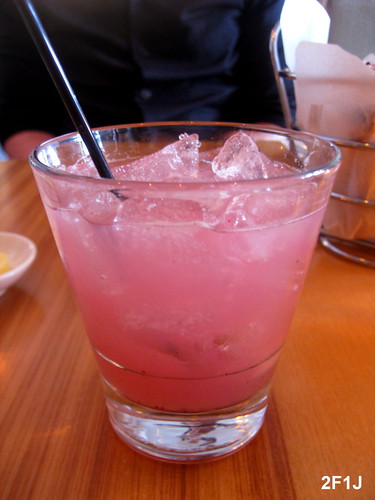
Hibiscus Caipirinha: Leblon Cachaca, Domaine de Canton, fresh lime, house made hibiscus syrup
We started the night with an interesting twist on this classical Brazilian cocktail which got some refreshing floral notes from the hibiscus syrup balanced by the ginger liqueur.
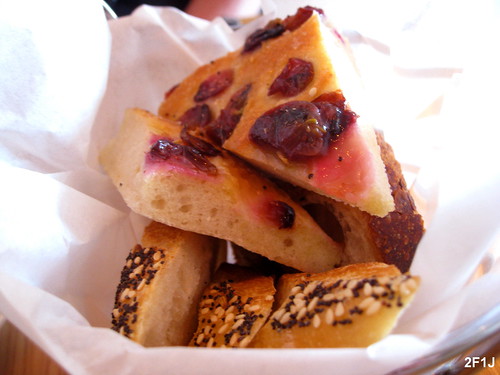
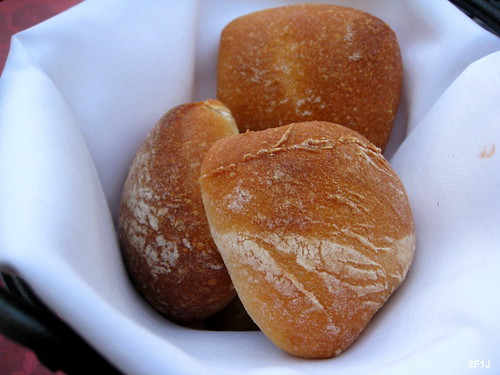
Bread Service: Kitchen 1540 serves several different breads for the bread service.  Most of the selection is decent with the highlight of the grape-fleur de sel foccacia

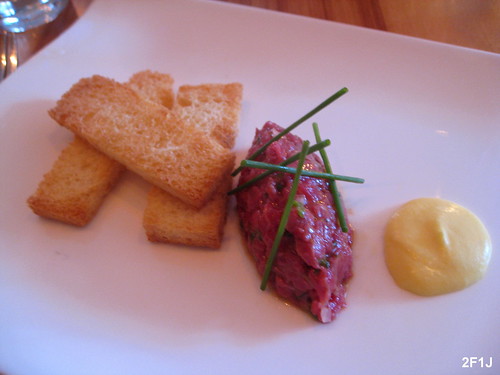
Course 1A: Bison tartare, smoked bacon Sabayon, brioche, chives
We had many different tartars so far covering beef or venison but this was the first time with bison. The bison had a surprisingly strong and rich flavor with some subtle background notes from the mixed-in lemon oil. The bacon sabayon added a complementing smoothness to this excellent dish.
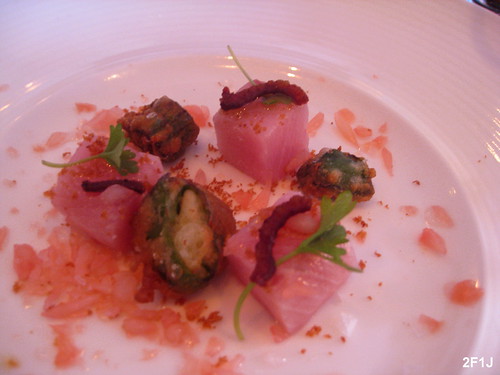
Course 1B: Hamachi crudo, shishito peppers, grapefruit supremes, shaved bottarga
We expected to get the same courses throughout the tasting menu but were surprised when our server brought us two different first courses and mentioned that Chef McCabe was planning to continue so for the entire menu so that we had a chance to taste more different dishes – a nice and welcome surprise. Here we had some beautiful pieces of hamachi with a firm but yet melting, tender consistency which were paired in a classical fashion for crudo with a sour-salty-peppery mix consistent of grapefruit, bottarga and shishito peppers. A very good example of McCabe’s approach to show his own interpretation of well known dishes by adding unexpected but yet fitting components.
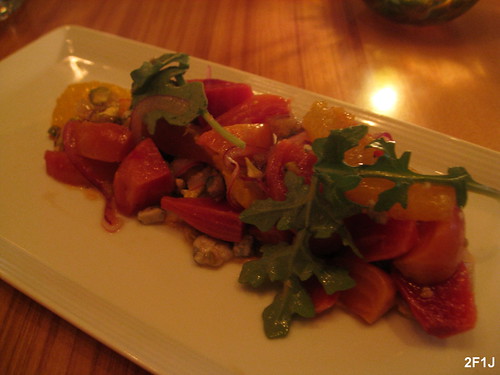
Course 2A: Organic beets, Valdeon blue, pistachio brittle, caramelized yogurt
Beets can be a difficult ingredient to work with as it easily can overshadow a dish with its earthy sometimes even muddy flavor. And so we like beets as part of a dish but are often wary about it as the main ingredient. Here we have a prime example how it can take the center stage but its flavors are impressively incorporated into the whole dish – tender beets perfectly cooked so that they also show their subdued natural sweetness are nicely balanced with the sharpness and saltiness of the strong cow and goat’s milk cheese whereas the pistachio brittle not only gives a textural contrast but also some appreciated sweetness.
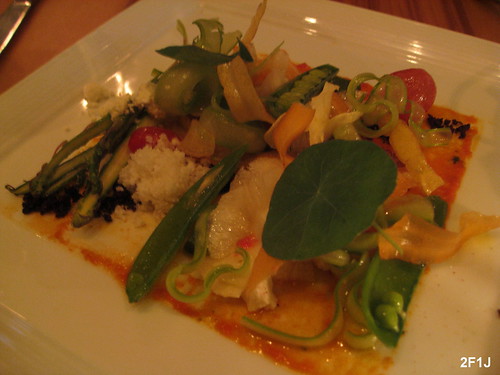
Course 2B: Farm house salad - organic vegetables, sundried tomato puree, pistou gelee, orange blossom vinaigrette
It’s interesting to see that some of the fine dining restaurants, like Blanca and Rancho Valencia, had on their recent tasting menus some interpretations of salads showcasing the abundance of outstanding local produce covering it from very different angles. Whereas Blanca’s approach focused on the flavors of the produce itself with very minimal distraction from anything else, e.g. vinaigrette, Kitchen 1540 incorporated the produce in a much more complex dish with many different flavor components including some dehydrated goat cheese, sundried tomato puree, orange blossom vinaigrette and olive powder. Both variations were very different but highlights of their tasting menus and for us a kind of “signature dish” for San Diego.
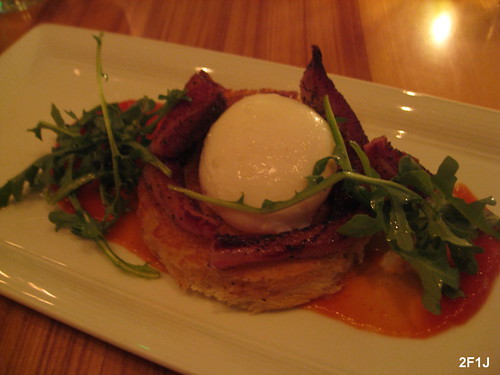
Course 3A: Bacon & egg - house made pancetta, 62°C egg, brioche, smoked ketchup
There are dishes where you immediately known that they are a success when they are brought to the table even before you taste them. What can go wrong if you combine pancetta, a runny egg and some brioche and perfected by some tangy ketchup and arugula to cut through the richness. A dish you want to have for breakfast every day.
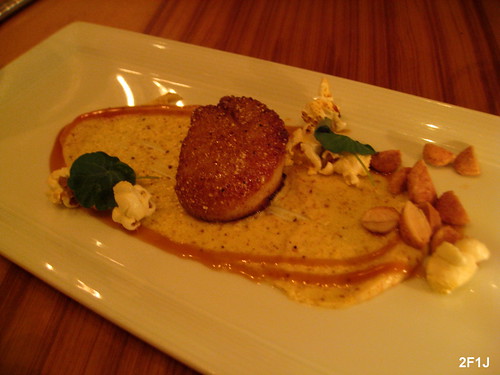
Course 3B: Diver scallop, popcorn puree, candied almonds, salted caramel, nasturtium
The combination of tender diver scallop and popcorn puree with its intensified corn flavor worked surprisingly well. The candied almonds gave some additional sweetness and textural contrast to the dish and so the salted caramel played a key role as it provide some much need saltiness to counter the sweetness of the other ingredients.
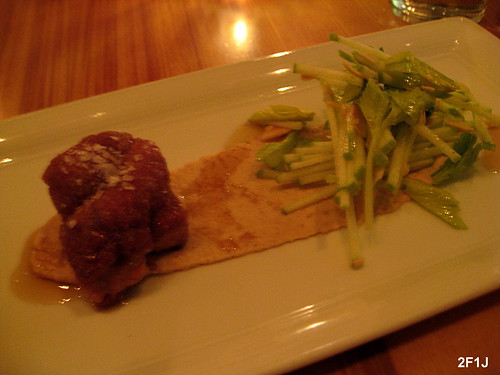
Course 4A: Pan roasted sweetbreads, smoked almond milk, blis maple, apple celery salad
Too often sweetbreads are covered in a thick crust of breading so that it is hard to discern their natural flavor. Here we had a perfectly roasted sweetbread without any distracting coating just with a crisp outer layer and a creamy core. The apple celery salad gave a refreshing touch to the dish whereas the smoked almond milk acted as overarching component pairing nicely with the sweetbreads and the apple celery salad independently.
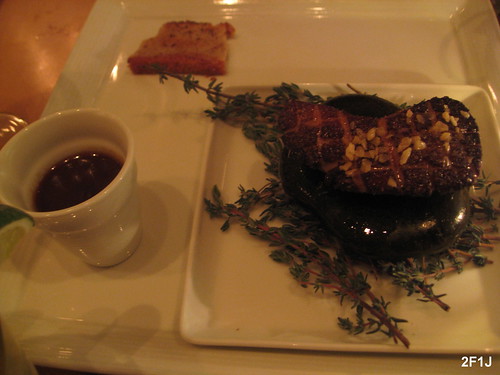
Course 4B: Stone seared foie gras, tangerine pop rocks, tangerine reduction, black pepper financier
Very interesting preparation and presentation of a flawless piece of foie gras seared by the hot stone. The thyme under the hot stone added an enticing aroma component to the dish. The tangerine reduction proved to be sweet enough to cut through the richness of the foie gras but not to be overly sweet to dominate the dish. The tangerine pop rocks were a nice gimmick adding some acidity whereas the black pepper financier had some noticeable spiciness from the pepper.
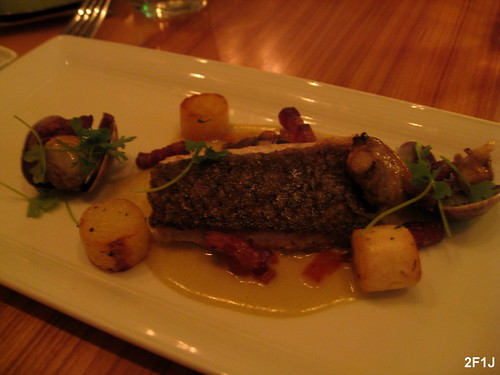
Course 5A: Pan seared Barramundi, clams, Yukon potato, pancetta, celery, Tabasco
This dish was a play on a deconstructed clam chowder centered around the moist barramundi with its crispy skin. The clams brought some of their characteristic brininess which was enhanced by the saltiness of the pancetta. The potato and the celery acted as the base of the dish with earthiness and tied the components of this successful “clam chowder” together.
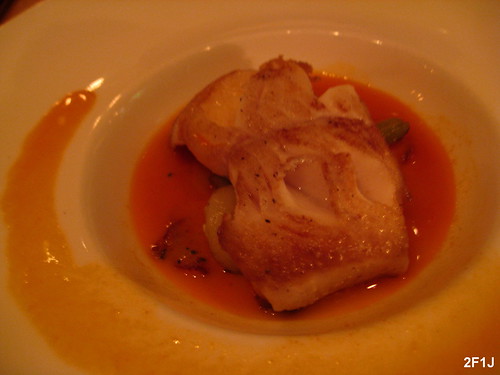
Course 5B: Pan seared Black Cod, cipollini onions, fingerlings potatoes, chorizo-mussel broth
Conceptionally a similar approach but with a different flavor profile as the other fish dish – centered around the very flaky black cod, a good combination of brininess and saltiness from the chorizo and mussel broth and again potatoes, this time accompanied by cipollini onions, as the base of the dish. Both dishes showed that the strength of Kitchen 1540 of working with fish.
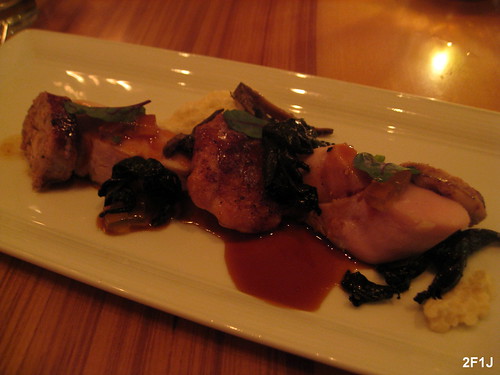
Course 6A: Organic chicken – sous vide breast, crispy thigh, chicken-fennel sausage, lobster mushroom, scrambled cauliflower, jalapeno-apple gastrique
Chicken is often dreaded in tasting menus as too boring and flavorless but here we had an impressive take on different parts of the chicken – chicken breast which was cooked by sous-vide to ensure a very tender and moist piece, crispy, flavorful thigh and housemade chicken sausage. The jalapeno-apple sauce was a key part of the dish as it added a complex sweet-sour-spicy mix which lightened up the preparation.
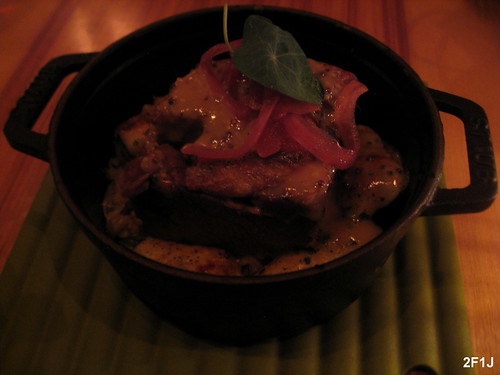
Course 6B: Braised Kurobuta pork shoulder, herb gnocchi, braised cabbage, bacon, pickled onion
The most rustic dish of the tasting menu was appropriately served in small Staub cocotte. The braised pork shoulder and cabbage was quite close to dishes we have made at home but what elevated this dish for us were the herb gnocchi – light and fluffy yet with distinct flavor supporting the braised ingredients and at the time they transformed the dish to a surprisingly light course.
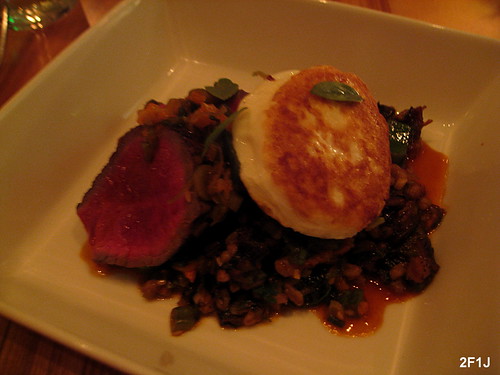
Course 7A: Natural beef tenderloin, kim chi fried farro, fried egg
Farro is one of the grains you don’t see too often on menus which is a shame as it has a wonderful nutty flavor which works nicely with many different dishes. Here is was quite uniquely combined with kimchi to give the dish a subtle sour character which paired well with the tender, sous vide cooked, beef tenderloin and the fried egg. The dish appeared to be a strange combination of components which didn’t really fit at first but really grow on us after a few bites.
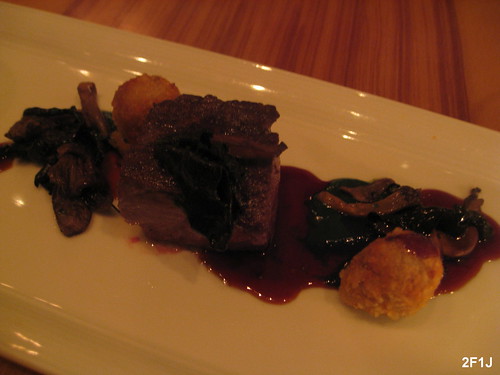
Course 7B: Pork belly, smoked potato croquettes, lobster mushrooms, tomato-cabernet reduction
Pork belly might be one of our favorite cuts of meat and it didn’t disappoint here - very tender with a crisp skin it clearly showed all the strong points one expects. Even though the pork belly took the center stage in this dish it was fittingly accompanied by potato croquettes which could have a stronger smoked flavor and the tomato-cabernet reduction which added some acidity to cut through the richness of the pork belly.
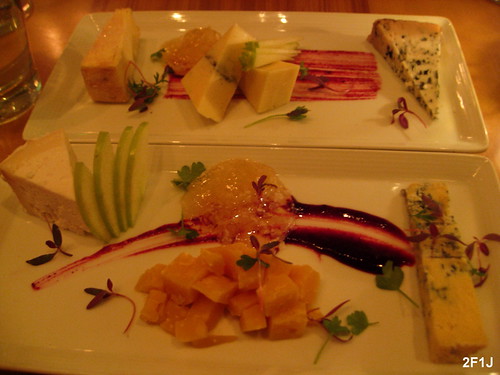
Course 8A + 8B: Cheeses with accompaniments
The cheese plates presented a surprisingly large array of cheeses covering different flavors and textures mainly focusing on cow milk cheese with Schlosskrans, Vintage Gouda, Morbier, Valdeon Blue and Roaring Forties Blue and one goat cheese with Boucheron.  Definitely one of the better cheese plates we had in San Diego.
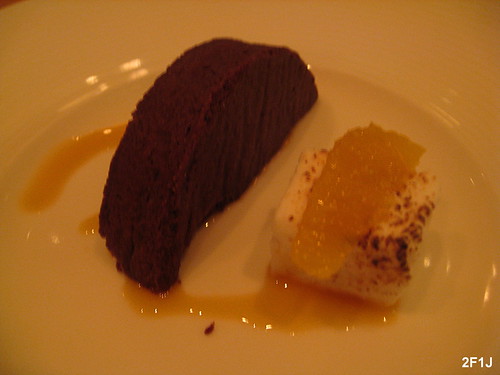
Course 9A: Chocolate caramel tart, orange marshmellow, carbonated orange
A rather classical chocolate caramel tart which came alive by the inclusion of orange. The fruitiness balanced out the sweetness and richness of the chocolate to lighten the dessert. We also liked the addition of marshmellow as it provided an interesting textural contrast to the tart.
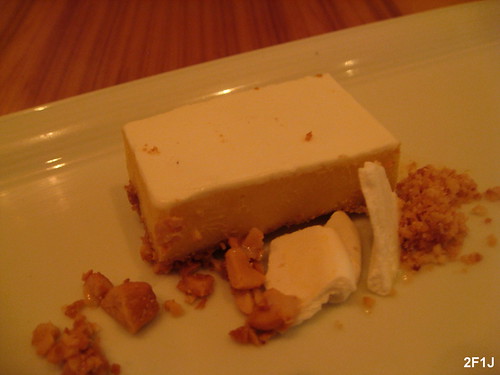
Course 9B: Frozen key lime pie, coconut streusel, fried cashews, dehydrated mering
Overall for us the more successful dessert with a very good combination of different textures, temperatures and well balanced flavors. The frozen key lime pie showed the right amount of sweetness and tartness to be refreshing without being too rich. The coconut and cashew flavors helped to tame the sweet- and tartness of the pie even more and added a welcomed complexity to the dish.
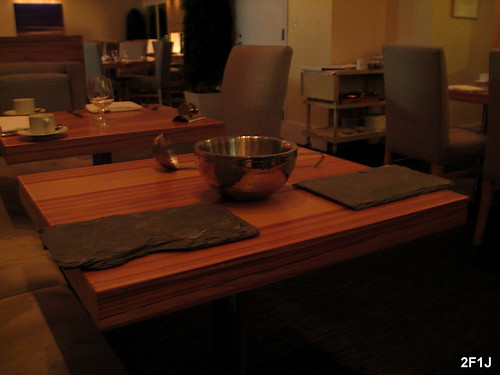
Course 10A + B: N2-Ice cream Sunday
At this time of the tasting menu we were one of the last guests in the restaurant and once the server brought out a large metal bowl, ladle and dewar vessel to the table next us a number of servers and cooks gathered around our table to watch the preparation of our last course.
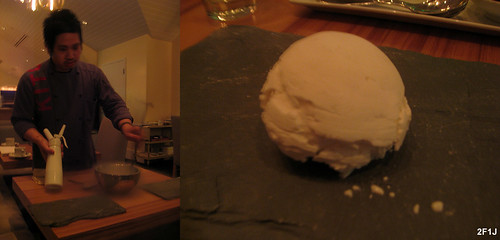
Sous chef Jonathan Bautista came and started to do his work with an iSi creamer and liquid nitrogen…
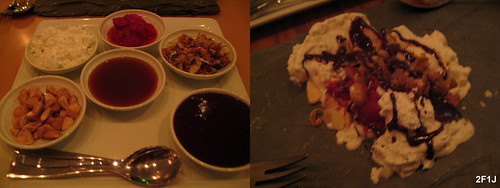
…to form a sphere of frozen vanilla cream. Together with an array of condiments, like chocolate and caramel sauce, nuts, whipped cream and macerated raspberries, we could than build our own ice cream sunday. The liquid nitrogen gave the frozen vanilla cream a range of different consistencies. The outer layers were frozen very hard whereas the inner layers became softer and softer - a perfect ending to an outstanding tasting menu.
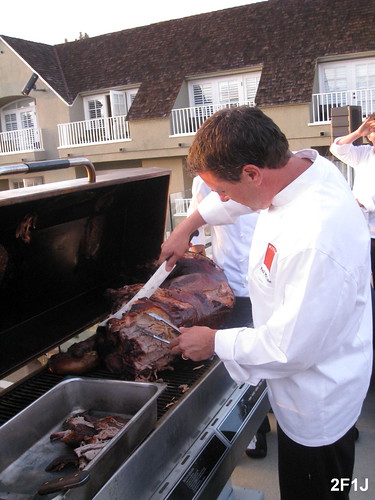
We came with high expectations after our good experience with J. Taylor and Kitchen 1540 easily met and exceeded them. It was refreshing to see that after Blanca and Rancho Valenica there is another restaurant and chef in San Diego who doesn’t only try to satisfy the mainstream by playing it safe but trying to create a unique restaurant with its own identity. The dishes at Kitchen 1540 covered a wide range of ingredients, flavors and inspirations but it always felt as Chef McCabe was trying to create his own vision and not just mimicking other well known restaurants. It was also nice to have a chance to talk to the chef a few times throughout the night and hearing about different topics including the sourcing of his ingredients but also his whole grilled pig which he prepared for a Chef Confab dinner some time ago.


The excellent impression of Kitchen 1540 didn’t stop at the kitchen but was equally spotless with the service – very knowledgable and we never felt rushed so that the food was perfectly paced which was especially welcomed as the dishes were considerable larger than at regular tasting menus and we could understand why it was called white flag tasting menu.
It seems that it is indeed possible to get excellent and creative food in San Diego even though it might take a little bit more efforts than in other cities as it is often necessary to contact many chefs directly to give them the creative freedom they need to create memorable tasting menus. And so we were pleased when shortly after our visit Kitchen 1540 made the white flag tasting menu a regular menu option without any necessary prior notice. Unfortunately very recently Chef McCabe surprisingly decided to leave Kitchen 1540 to become partner at the Delicias restaurant. Even though he mentioned in interviews that the culinary direction at Delicias won’t be as ambitious as at Kitchen 1540 we hope there will be some kind of creative outlet at the restaurant for him to continue to present such outstanding food. It will be also very interesting to see who will follow him as Executive Chef at Kitchen 1540 and if the management at L’Auberge Del Mar is willing to continue to support such an ambitious restaurant concept or if it will convert it to a more “conventional” hotel restaurant. It would be disappointing to lose another important restaurant for San Diego after the closing of Blanca and the changes at Rancho Valenica.

1540 Camino Del Mar
Del Mar, CA 92014
(858) 793-6460

August 29, 2011

Two and a Half Foodies - One Journey

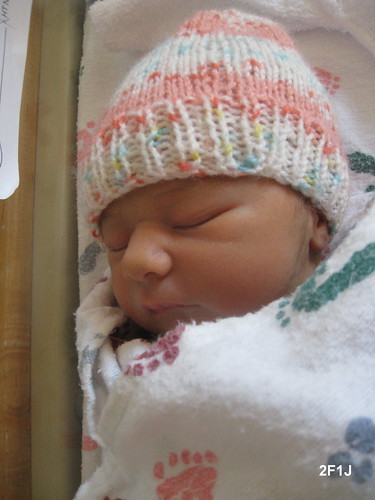
We might have to contemplate changing our blog name from "Two Foodies - One Journey" to "Two and a Half Foodies - One Journey" due to the birth of our cute little daughter Saskia last week.

Here is her first blog post for you:


Hello,

I am here !!! My name is Saskia, I was born on August 24, 2011 at 3:26 pm, 20 inches long, weighing 8 pounds 1 ounce. I am a little cutie with lots of black hair (from my dad!) and enjoy entertaining my proud parents Nicole and Robert day and night. My mom is recovering well from my long delivery, and we are all happy to be together.

Greetings to all Foodies ! I am very excited to enter the culinary world...

Saskia

August 10, 2011

Chicken and Crab Callaloo – A Culinary Visit to the Caribbean

When we normally decide what to cook for the next meal we often get inspired by what might be in season and available at the farmer’s market or one of the supermarkets which sells local produce, but sometimes cooking can also be a chance to explore new regions throughout the world. Though not in person, a culinary trip to another country gives you often a good idea about the history and influences of that country. One region many people associate with beautiful beaches, sunshine and vacation but also with poverty and colonialism is the Caribbean. When we started to look into typical dishes from this region one dish which was often mentioned was Callaloo. But the more we looked into the history and background of the dish the more we realized saying that we look for a typical dish of the Caribbean is like saying we would look for a typical dish of Europe. The Caribbean might be home to just 35 million people but consists of many different countries or still dependent territories and many of them have a very diverse history and population.

The background of Callaloo is even more complex as the word not only describes the dish but also the main ingredient which can mean a different plant depending on the part of the Caribbean. The common ground between all different versions is that Callaloo is a spicy soup or stew which is made out of edible leaves from different tropical plants. In Trinidad and Tobago for example taro leaves are used for Callaloo, Jamaicans use amaranth leaves whereas malanga is used in Puerto Rico. But also the preparations vary strongly between different countries in this region – Jamaicans make a simpler version by just using the callaloo leaf and salt whereas in Trinidad and Tobago okra and coconut milk are added to give a very different flavor profile. Callaloo is often served with rice and some seafood or meat and so in the end we decided to go for a version close to one from Trinidad and Tobago with a chicken and crab callaloo.


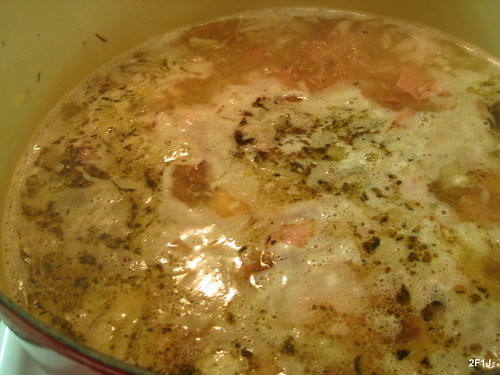
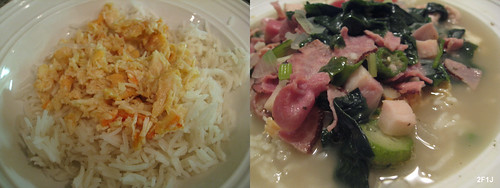
Callaloo is also often named pepper pot but this name doesn’t really do this version justice. Even though the dish had a pleasant spicyness from the Serrano chili the flavor profile was much more complex. The base of the dish comes from the typical Callaloo seasoning – garlic, scallions and thyme. Bacon and ham add saltiness, whereas the coconut milk balances the spicyness but also contributes a special character reminiscent of the tropical origin of the dish. The crab displays the abundance of seafood of the region. Unfortunately we weren’t able to get hold of taro leaves but spinach is often mentioned as an adequate replacement. The okra not only helped to thicken the stew but also showed the African influences of the dish. Taken together this dish not only includes many typical ingredients of the Caribbean but represents with its different culinary influences part of the history of the region - it is a quite unique dish clearly related to its region.

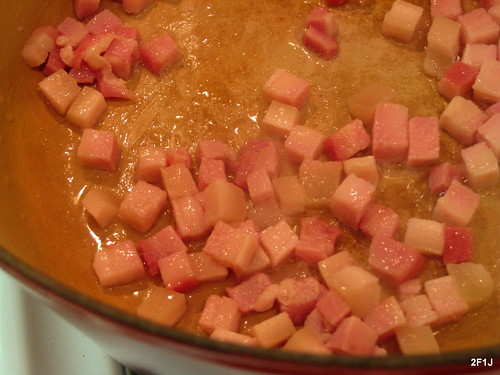
Saute bacon for 7-8 minutes until it starts to crisp. Drain with a slotted spoon and put aside.

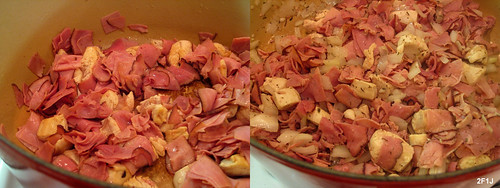
Brown chicken and ham in bacon drippings for 7 minutes. Add onion, garlic and thyme and cook for additional 5 minutes until onion starts to soften.

Add broth, bring to a boil and simmer it covered for 10 minutes.

Add spinach, okra, coconut milk, bacon and simmer for 5 minutes. Stir in scallions and Serrano chile and season with pepper and salt.

Serve by ladling over freshly cooked rice and some of the crabmeat.


Recipe adapted from “Cuisine at Home”

Serves 4

4 slices thick-cut bacon, diced
250 g (8.5 oz) chicken breast, cubed and seasoned with salt and pepper
125 g (4.5 oz) ham, cubed
2 white onions, diced
2 garlic cloves, minced
½ tsp dried thyme
1.4 L (6 cups) chicken broth
2 bunches spinach, chopped
200 g (7 oz) frozen okra, sliced
240 ml (1 cup) coconut milk
2 bunches scallions, sliced
2 serrano chilies, diced
230 g (8 oz) crabmeat

July 13, 2011

Cavaillon (San Diego) – Two Chefs, One Tasting Menu

There are normally two ways how the time of a chef at a restaurant often ends – either the restaurant runs out of money and it has to close or the owner of the restaurant decides on a different culinary direction of the restaurant and hires a new chef to initiate these changes. When recently chef and owner Philippe Verpiand of the Cavaillon restaurant announced that he was unhappy with his current situation and the general state of affair of restaurants in San Diego and plans to move to Houston we expected a similar fast end of his restaurant. Cavaillon occupied an interesting niche for us in San Diego covering the culinary space of strongly French inspired food somewhere between bistro and haute cuisine and we had many excellent dinners there including some memorable black truffles tasting menus. After reading that Chef Verpiand thought “California is way too complicated. Little laws. Too much taxes. Not enough customers. I can do the same thing with a better lifestyle… Everybody wants to bring his own wine and they complain about I’m charging corkage… It’s a sad joke” we didn’t expect any future for his restaurant. So we were caught by surprise when after a few weeks we heard the news that he was actively searching for a new owner and successor in the kitchen who could continue his restaurant and cuisine even under the same name of the restaurant. And indeed soon thereafter the restaurant webpage announced that the search was successful and Cavaillon had a new owner and chef – Michael van Euw.

Chef van Euw was born in the German speaking part of Switzerland and originally pursued a completely different career path by getting a degree in economics and environmental studies. But he then decided to switch gears and followed his culinary interest and enrolled at Le Cordon Blue in London with a focus on French cuisine and patisserie. After apprenticing at the Capital Restaurant in London under Chef Erick Chavot he moved to the Culinary Art School in Tijuana in Mexico to establish a pastry curriculum. An important career step for him was then his work as Executive Chef at the Le Cordon Blue supper club Signatures Restaurant on board of the Seven Sea Mariner. He then recently came to San Diego not only to acquire Cavaillon but also to start VE Chocolates, a private label chocolatier.

His background seemed to make him a perfect candidate to take over Cavaillon and continue the tradition of French cuisine but at the same time incorporate his own style. When we recently received an e-mail from the restaurant that Cavaillon would offer a special tasting menu featuring both chefs at the same time (two chefs, one tasting menu) we saw this as a good opportunity to experience and compare the cooking styles of both chefs.

Despite the year round great weather in San Diego there are surprisingly few upscale restaurants with a nice patio for an extended lunch or dinner. Even though Cavaillon doesn’t have an ocean view it is still a great place for al fresco dining as it is located in the quite suburb of Santa Luz with no significant traffic close by. And since the summer just recently started and the temperatures are getting higher it was the perfect night to sit outside for a relaxing dinner.

Cavaillon just offers their house made rolls as the only choice for bread but the fresh, warm rolls are addictive and we never end up with just one basket.

1st Course: House cured salmon, micro fennel, lemon mustard vinaigrette (von Euw)
The salmon was a very good start to the tasting menu with its elegant flavor and distinct but restraint taste of spices in the background. We wished the salmon would have been cut a little bit thicker to have more pronounced flavor. The vinaigrette with its lemony taste brought some acidity which helped to brighten the flavor of the dish. Only the presentation of the dish with its swirls of vinaigrette reminded us more of something from a cafeteria and didn’t really fit to this good dish.

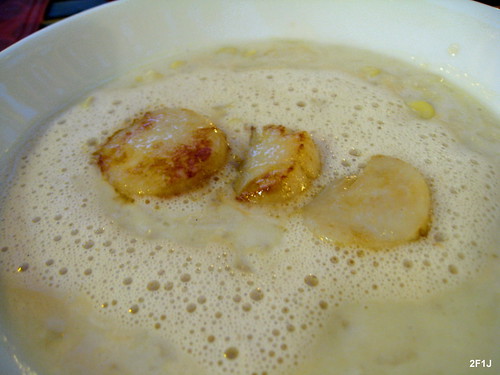
2nd Course: Seared scallops, white corn risotto, vanilla foam (Verpiand)
Risottos were always one of the signature dishes at Cavaillon and this one was an interesting variation. This risotto appeared to be soupier than usual which was also caused by the vanilla foam which had a strong aroma. At first it appeared that the vanilla flavor would be too dominant and cover all other ingredients but once we mixed all components the risotto was very well balanced with some sweetness from the corn and some saltiness from the parmesan countering the vanilla. The perfectly seared and tender scallops completed the dish.

3rd Course: Pan roasted wild turbot with truffled gnocchi, mushroom sauce (von Euw)
Pan roasting a fish can easily dry out the filet and especially with such delicate fish as the turbot it was impressive to see how moist and perfectly cooked this piece of turbot ended up. The light gnocchi had some truffle aroma which was subdued enough to not overwhelm the dish. The spinach and mushroom sauce were rather classical accompaniments for the strongest dish of the tasting menu.

4th Course: Roasted duck breast “a l’orange”, glazed mushrooms, daikon radish (Verpiand)
A fine example of classical French cuisine – very tender duck breast with a light orange sauce accompanied by braised daikon and butternut squash puree. The glazed mushrooms were a good addition to the dish as the vegetable component but the previous course also had some mushrooms flavors which seemed too much overlap between both courses and we thought that a different vegetable for this dish would have been a better progression for the tasting menu.

5th Course: Warm chocolate molleux, lime ginger sorbet, warm chocolate froth (Verpiand, von Euw)
With the strong pastry background of Chef von Euw we were particular curious about his dessert. The combination of chocolate lava cake and a chocolate soup/froth looked first like chocolate overkill but the combination with the strong lemony sorbet really elevated this dessert. The chocolate components or the sorbet by itself were both well made but rather one dimensional but once you ate both together they were nicely balanced. This dish was for us similar to the risotto course as it really grew on us the longer we tasted it.

Mignardise


On our way to Cavaillon we discussed how much of the restaurant we would recognize from our last visit several weeks before when the kitchen was still run by Chef Verpiand. But once we entered the restaurant we immediately recognized many of the waiters and had some small talks with them and it felt not much had changed. One notable difference was the new GM Michael who was very involved with many guests throughout the night and worked efficiently with his team to make it a good experience for everybody.

Chef von Euw’s decision to have a combined tasting menu with dishes from former Chef Verpiand was a similarly well thought out approach to combine well established parts of Cavaillon with his own new ideas. His own cooking style is similarly to Verpiand also founded in French cuisine and so his interpretation of the dishes, his own and Verpiand’s, felt cohesive throughout the tasting menu. At the same time his own dishes were the highlights of the tasting menus and one could feel that he felt more comfortable with them and that they are a good sign in which direction Cavaillon will go in the future. And indeed when we had the chance to talk with Chef von Euw after the tasting menu he indicated that he didn’t want to overwhelm the regulars at Cavaillon with too many changes from the start but at the same time also give his own team enough time to adapt to his own style and dishes by offering a menu with several “classics” from Verpiand even though he had left the restaurant several weeks before. Throughout the month of July he is planning to change the menu more and more so that by the end of the month all of the dishes will be his own creations. He also mentioned that he wants to continuously evolve the menu at Cavaillon. We felt that Chef von Euw is up to a good start at his new restaurant and that if he continues in the direction he is planning he should be able to keep the regulars with familiar French cuisine but at the same attract new clientele with more modern interpretation and techniques like sous vide. We are looking forward to have the next tasting menu at Cavaillon solely based on Chef von Euw’s own ideas.

14701 Via Bettona
San Diego, CA 92127-4808
(858) 433-0483

June 25, 2011

Fooding around in LA with Laurent Quenioux at Starry Kitchen (Los Angeles)

There is probably hardly anybody who wouldn’t agree that music, art, books or food are an important part of our life and that everybody is enjoying it in one way or the other. We all like to listen to music or read a book to relax, visit a museum or gallery to look at paintings or remember fondly certain dishes made by our parents when we were younger. But once you start asking different people what are their true favorite bands, artists or restaurants there will hardly be any agreement and everybody has their favorite band or restaurant often based on certain memories or connections they feel to them. Over the years we have visited many different restaurants and often came repeatedly back to some because we like them so much. But if anybody would ask us what was our favorite restaurant over the last 1-2 years our answer would be without doubt – Bistro LQ.

It is always hard to describe what makes for us a good dish to become special or a chef to stand out, but with Chef Laurent we felt from the very first visit at Bistro LQ a unique connection/resonance how he interprets food, creativity and execution which is very close to our idea of a perfect meal. Rooted in French cooking techniques and preparations he hasn’t limited himself to any style or country anymore and takes ingredients, flavors and conceptions from anywhere and combines them in his own, unique way. He constantly challenges common notions which flavors and ingredients shouldn’t work together and every dish tells its own story, and it is quite stimulating for us to try to come up with our own interpretation which is part of the appeal of Bistro LQ. And so it is no surprise that Bistro LQ became our second “living room” on our frequent trips to LA and that GM Eric Bouty even mentioned to us that we were among the most frequent guests of the restaurant. Unfortunately excellent cooking and good reviews don’t guarantee success especially if you are cooking far away from the mainstream in a style that might be better fitting with restaurants in San Francisco. This together with issues with the landlord led to the closing of Bistro LQ in March of this year – a very sad day for us.

After a very short time Chef Laurent appeared back on the culinary scene as Executive Chef at Vertical Wine Bistro in Pasadena, at collaborations with Chef Walter Manzke, and perhaps most interesting with a pop-up like concept LQ Fooding Around in LA at Starry Kitchen.

What appears at first as an odd combination is actual a nicely matching one. Not unlike Laurent Quenioux the owners of Starry Kitchen, Thi and Nguyen Tran, took an unconventional approach to realize their ideas. Starry Kitchen originally started in their Hollywood apartment in which they served home cooked meals. Once their home restaurant became too successful it got shut down by the health inspection for not having a commercial kitchen. Despite this setback they didn’t give up but decided in the beginning of 2010 to open their “official” restaurant in Downtown LA. Starry Kitchen serves lunch throughout the week but only dinner on Thursdays and Fridays, and so it was a perfect match to have a Bistro LQ pop up from Sundays to Wednesdays. And it was no question for us to visit LQ Fooding as soon as we had heard about it.


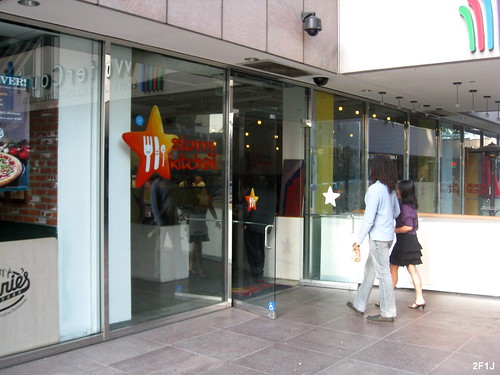
Starry Kitchen is located in downtown LA at the California Plaza

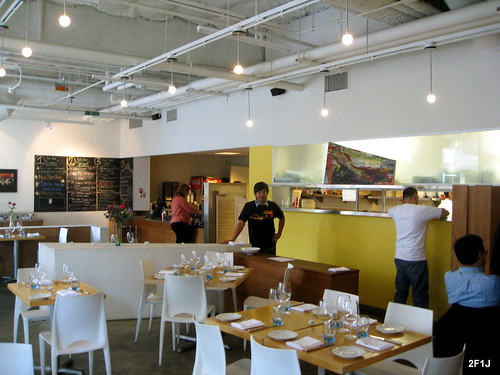
The restaurant has more a feel of a lunch place, but the team around Nguyen did a great job to make it a very welcoming and relaxing place for dinner as well.

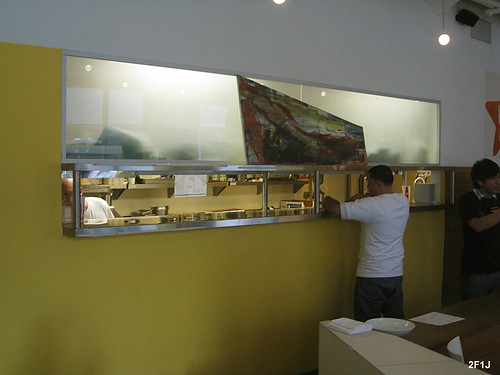
Starry Kitchen has a partly open kitchen and you could see Chef Laurent and his staff busy at work.

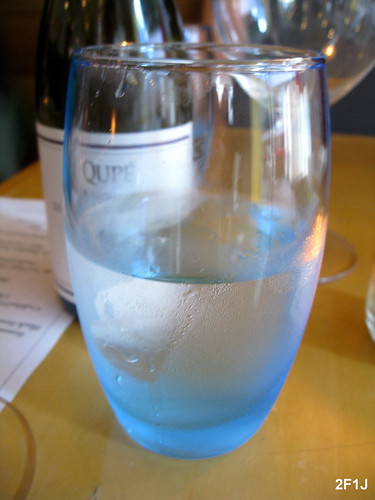
A few items like the water glasses seemed to have come from Bistro LQ as well as their signature cucumber-lemon water.

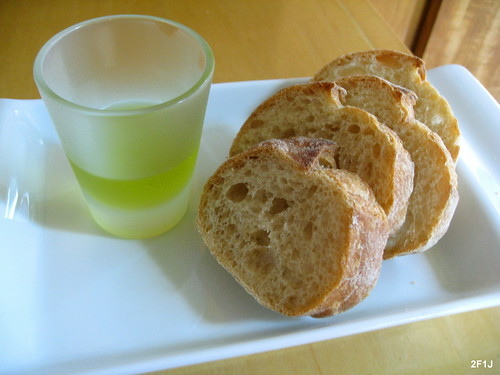
The bread from Bread Lounge was perhaps the weakest part of the meal but good enough to sop up some of the sauces throughout the night. It was served with good olive oil instead of the more common butter.

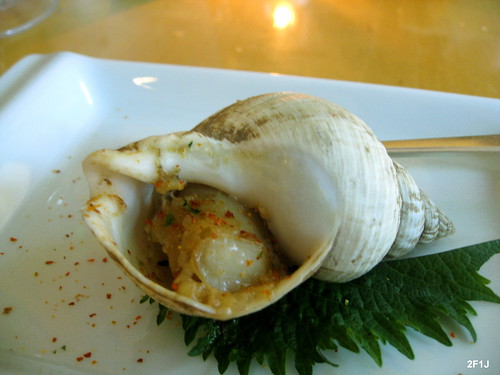
Amuse Bouche: Sea snail, soy butter
French meals often start with escargots, but the whole dinner had Asian influences and so it was just fitting to serve a sea snail as a starter and accentuating it by pairing it with soy butter instead of garlic butter. The sea snail had a slight rubbery texture not unlike geoduck and tasted sweet and was faintly reminiscent of the ocean.

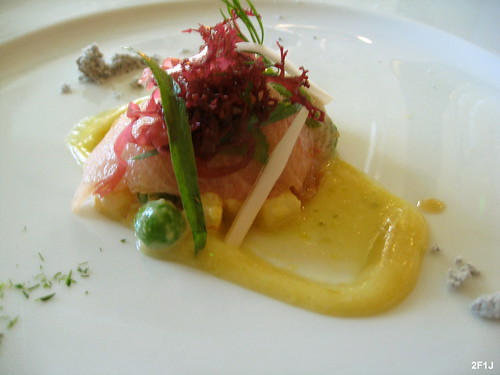
1st Course: Summer vegetables, hamachi, lemon miso curd, black sesame soil, yuzu kosho, herbs and sea weeds
The hamachi had an impressive marbeling and a smooth and buttery taste. At first the summer vegetables, like peas, corn, fava beans, seemed like an unusual pairing but with their natural sweetness and the tartness of the lemon miso curd and yuzu kosho the whole dish was perfectly balanced. The sea weed added an interesting textural crunch to the dish which reminded us of a spring dish.

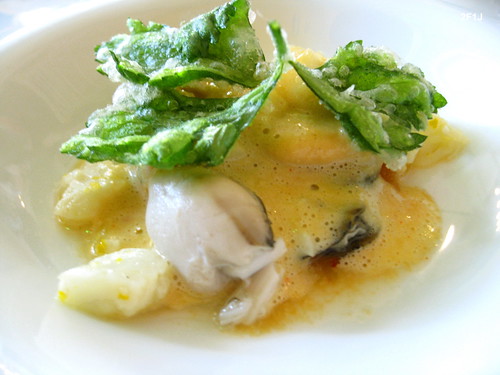
2nd Course: Carlsbad oysters and mussels, kimchi sabayon, Chinese celery, cauliflower
Both the mussels and oysters were very tender and had a similar consistency as the cauliflower. The kimchi sabayon had a slightly sour flavor but also some hidden spicyness which kicked in after a short while. The fried Chinese celery leaves added an unexpected flavor which brightened up the dish.

3rd Course: Mu shu foie gras
Mu shu is a staple of Chinese restaurants in the US which are heavily Westernized. It often consists of shredded pork and vegetables wrapped in a pancake. In Laurent’s playful interpretation, the pork was replaced by a perfectly seared piece of foie gras. Foie gras is often paired with strong sweet or savory flavors to counterbalance its richness but in this dish the subtle flavors of the vegetables and the hoisin sauces created a nice balance so that the foie gras was always noticeable in every bite but it never overpowered the other ingredients. We easily could have eaten several of these wraps.

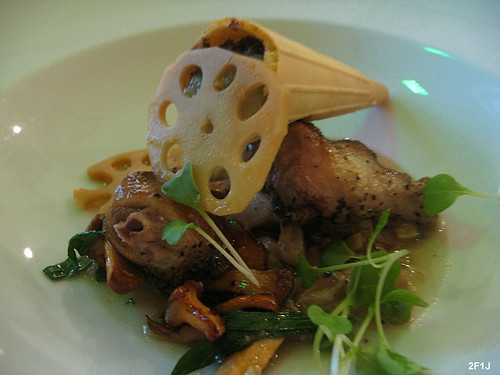
4th Course: Squab, veal feet, ginger cone boudin noir, mashed potatoes, apple
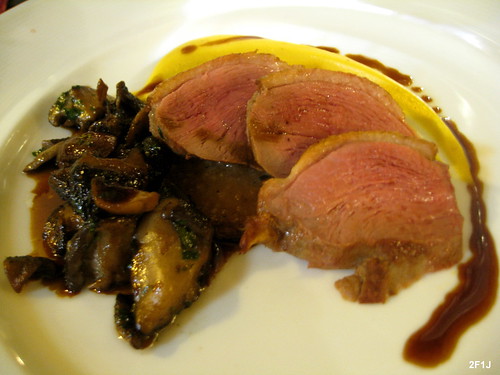
This dish featured two ingredients Chef Laurent used regularly at Bistro LQ – squab and boudin noir. The outstanding boudin noir was always a highlight and this was no exception. Served in a cone with mashed potatoes and apple puree it reminded us on dishes from Alsace. The squab which can easily be dry and tough was cooked perfectly. Both main ingredients were brought together by the veal feet which were small morsels of gelatinous meatiness.

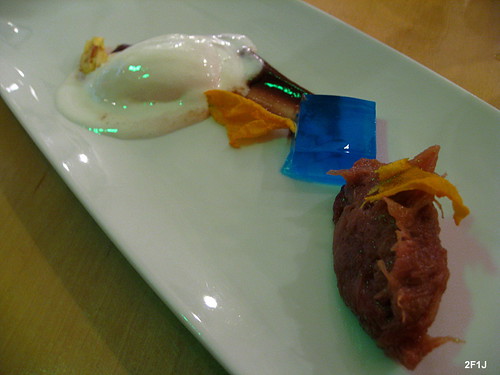
5th Course: Rhubarb, hazelnut soil, curacao cubes, sour cream sorbet
Rhubarb has often a very tart flavor but here it was cooked until tender with spices like cardamom and was in itself already tasty. The sour cream sorbet mellowed the tartness even more and proved to be the right balance - a strong finish for the tasting menu.


Tasting menus at Bistro LQ always provided rollercoaster rides through the culinary world with its different flavors, and this pop up incarnation was no difference. You often read the menu and wonder how these flavors could work together but once you taste the dish it becomes clear and obvious and you wonder why nobody else might have thought about that before. It’s not very often that we have a tasting menu in which every single dish worked, and after every single course we talk about that we wish we could get a second portion. Before this event we were curious if a pop up of Bistro LQ would change anything how Chef Laurent would cook, but beside a bit more Asian influences than before, perhaps as an homage to his hosts, the pop-up concept was an extension of his regular Bistro LQ. The ambience and service was even more relaxed and laid back than before but was always professional and fitting for the occasion. It was interesting to see the energy of Nguyen while he talked with every guest and explained different dishes, and hopefully even once LQ Fooding around LA stops at Starry Kitchen Nguyen will continue do similar concepts in the future as he, his team and the location seem to be a good match for such events. He definitely made us curious to stop by at Starry Kitchen itself in the near future.

It was great to eat dishes from Chef Laurent after the painfully long break since March, and we realized how much we missed it that we seriously considered to ask for a place on the patio of the restaurant for the sold out second seating at that night to start the menu over once more. Not unlike as with your favorite band it’s nice to listen to a single to remind yourself why you like them but what you are really interested in is to be able to listen to a complete LP/CD to be able to really dive into the music. Restaurants are no different and pop up events are a welcoming “snack” but what we really hope for is to have the possibility to again taste full blown tasting menus with Chef Laurent, and it was great to hear from him after dinner in the kitchen that he is planning to open a restaurant in Pasadena. We can’t wait for that to happen and will be among his first guests !

350 S Grand Ave
Los Angeles, CA 90071
(213) 617-3474